
Short answer: Bay County condominium boards in buildings constructed before 1994 may face fire sprinkler retrofit mandates under Florida law. Financing these retrofits — often $15,000 to $50,000 per unit — requires early reserve planning, special assessment structuring, and sometimes loan financing. The technology handles the cost modeling and compliance tracking, while the board provides the professional judgment and fiduciary oversight to protect unit owners from financial shock.

Why Fire Sprinkler Retrofits Are Surfacing for Bay County Condo Boards
Florida’s fire safety landscape shifted after the Surfside collapse in 2021, and while milestone inspections (FS 718.112(3)) and Structural Integrity Reserve Studies (SIRS) dominate the headlines, a parallel mandate has been quietly maturing: fire sprinkler retrofit requirements for older residential buildings.
Under the Florida Fire Prevention Code (adopted from NFPA 1 and NFPA 101), high-rise residential buildings equipped with automatic sprinkler systems must meet specific installation standards. For older condominium buildings in Bay County — particularly those built before modern fire code revisions — the gap between original construction standards and current code can trigger retrofit obligations. The Florida Legislature has extended compliance deadlines multiple times (most recently via SB 7052 in 2024), but each extension narrows the window for boards that have not yet acted.
For Bay County boards, the geographic reality compounds the urgency. Coastal condominiums along Panama City Beach and the Thomas Drive corridor include a significant inventory of 1970s and 1980s construction — buildings that predate modern sprinkler mandates and may now fall within the retrofit scope. Hurricane Michael (2018) already forced many of these associations to confront deferred maintenance. Fire sprinkler retrofits add another layer of capital planning that boards cannot defer indefinitely.
What the Law Requires: Florida Statutory Framework
Fire sprinkler retrofit obligations for condominiums arise from a combination of state statute and adopted fire code:
- Florida Statute 718.112(2)(f) — Governs condominium association powers and responsibilities regarding building safety, including compliance with fire safety requirements. Boards have a fiduciary duty to address known life-safety deficiencies.
- Florida Fire Prevention Code (FFPC) — Incorporates NFPA 1 (Fire Code) and NFPA 101 (Life Safety Code). The FFPC establishes sprinkler requirements for existing high-rise residential occupancies, with phased compliance deadlines.
- FS 617 — Florida’s Not-for-Profit Corporation Act, under which most condominium associations are incorporated. Governs board authority to levy special assessments and borrow funds for capital projects.
- Local Bay County ordinances — Panama City Beach and unincorporated Bay County fire marshal offices may enforce additional requirements beyond state minimums, particularly for buildings within specific occupancy classifications.
The statutory framework gives boards broad authority to fund retrofits through reserves, special assessments, or loans — but also imposes fiduciary obligations to plan proactively rather than react to enforcement actions.
FS 720 vs FS 718: Fire Safety Authority Comparison
While fire sprinkler mandates primarily affect condominium associations (FS 718), HOA boards (FS 720) should understand the distinction, especially in Bay County communities where governance structures sometimes overlap:
| Aspect | FS 718 (Condominiums) | FS 720 (HOAs) |
|---|---|---|
| Fire sprinkler retrofit mandate | Directly applicable — condo buildings with 3+ stories may fall under FFPC retrofit scope | Indirect — HOAs typically govern detached homes; common-area fire systems may apply but unit retrofits are owner-driven |
| Special assessment authority | FS 718.115 — board may levy without owner vote for safety compliance | FS 720.303(5) — may require member approval depending on amount and governing documents |
| Reserve study requirements | SIRS mandatory under FS 718.112(f)(2) — fire protection included in structural integrity reserves | Reserve study recommended but SIRS not mandated for HOAs |
| Board fiduciary standard | FS 718.111(1)(a) — officers and directors owe fiduciary duty to unit owners | FS 720.303(1) — comparable fiduciary duty to parcel owners |
| Loan authority for capital projects | Board may borrow secured by association assets under FS 718.111(1)(b) | Board may borrow subject to governing document limitations |
How Much Will a Fire Sprinkler Retrofit Cost a Bay County Condo Association?
Cost estimates for fire sprinkler retrofits in older condominium buildings vary widely based on building height, unit count, construction type, and whether the building already has partial sprinkler infrastructure. Based on industry data for Florida coastal condominiums:
- Per-unit cost: $15,000 to $50,000+ per unit, depending on building complexity and whether asbestos abatement is required in older buildings.
- Whole-building projects: A 50-unit building can face total retrofit costs of $750,000 to $2.5 million or more.
- Soft costs: Engineering studies, fire marshal plan review fees, and temporary relocation of residents during installation can add 15-25% to the base cost.
- Ongoing maintenance: Annual inspection, testing, and maintenance of sprinkler systems typically runs $1,500 to $5,000 per building, which must be reflected in operating budgets post-retrofit.
For Bay County associations already grappling with reserve shortfalls, hurricane recovery costs, and SIRS compliance, a fire sprinkler retrofit can feel like an impossible financial burden. But the cost of non-compliance — both in terms of fire marshal enforcement and potential fiduciary liability — is typically higher.
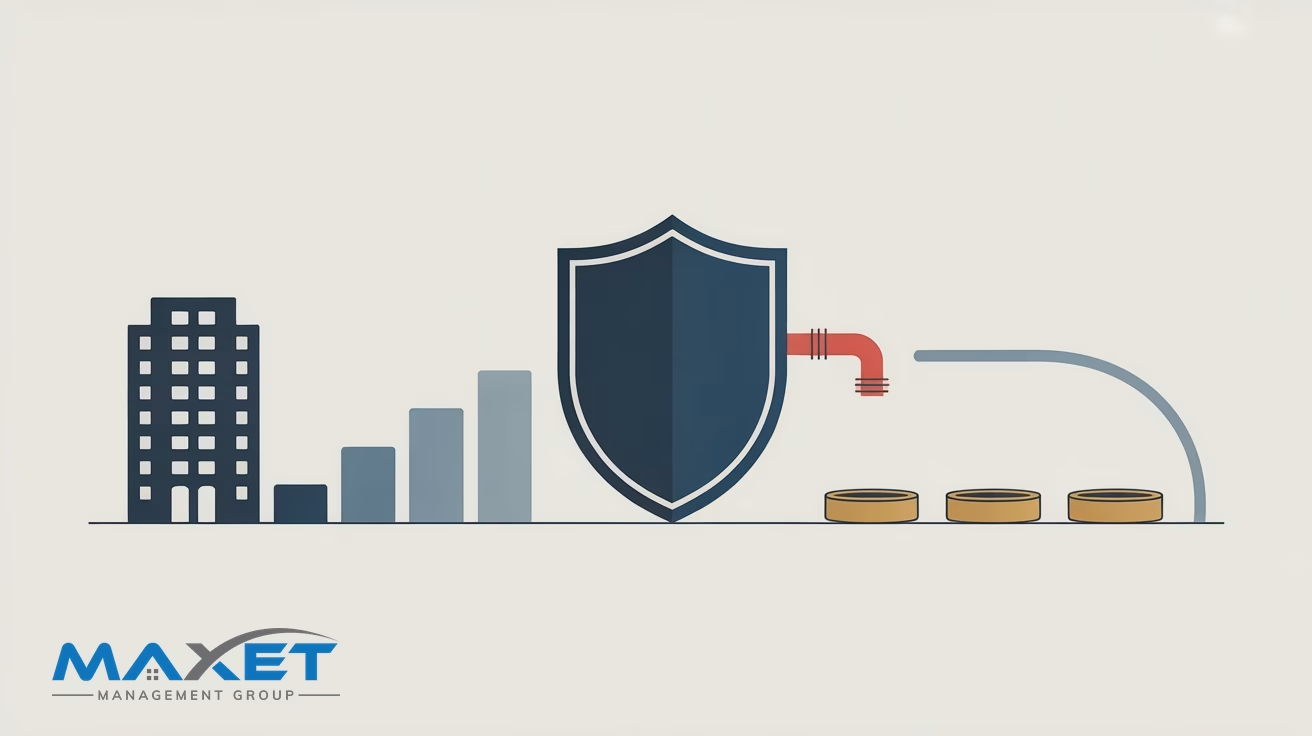
Financing Options: A Board Member’s Decision Framework
Boards have four primary financing pathways, each with trade-offs that affect unit owner affordability and association financial health:
1. Reserve Fund Allocation
If the association’s reserve study already includes a fire protection component (and SIRS-compliant studies should), the board can fund the retrofit partially from reserves. However, most older Bay County condos have historically underfunded reserves — a 2026 reserve study may reveal the fire protection line item is either absent or insufficient. The board should commission an updated reserve study that explicitly models the sprinkler retrofit as a capital replacement project with a defined remaining useful life.
2. Special Assessment
For condominiums under FS 718, the board can levy a special assessment for fire safety compliance without a unit-owner vote in many cases. The assessment can be structured as a lump-sum or installment plan. Key considerations:
- Lump-sum assessments create immediate cash flow but can cause financial hardship for owners on fixed incomes.
- Installment assessments spread the burden over 12-36 months but delay project completion and may incur interest costs if the association borrows to bridge the gap.
- Owner communication is critical — Bay County boards that have successfully navigated large assessments invested in transparent town-hall meetings, written FAQs, and individual owner outreach before the vote.
3. Association Loan Financing
Under FS 718.111(1)(b), condominium association boards may borrow funds secured by association assets, including the pledge of future maintenance assessments. A commercial loan from a Florida community association lender can spread retrofit costs over 5-15 years. This approach:
- Reduces per-owner monthly impact significantly versus a lump-sum assessment.
- Requires board approval and, depending on governing documents, may require a unit-owner vote.
- Adds interest costs (typically 5-8% as of 2026 for association loans) but preserves owner cash flow.
- Should be combined with a special assessment to repay the loan — the assessment funds are collected over time rather than as a single hit.
4. Phased Implementation
Some fire codes allow phased retrofit schedules, particularly if the association demonstrates a good-faith compliance plan. Boards can negotiate with the local fire marshal to implement retrofits floor-by-floor or building-by-building over an extended timeline. This approach reduces annual capital requirements but extends total project duration and may not satisfy all enforcement deadlines.
Traditional Management vs. Maxet’s Tech-Driven Management
The difference between surviving a fire sprinkler retrofit mandate and being overwhelmed by it often comes down to how the association manages the project. Here is how traditional management approaches compare to Maxet’s technology-driven model:
| Dimension | Traditional Management | Maxet’s Tech-Driven Management |
|---|---|---|
| Cost estimation | Single vendor quote; no benchmarking | Multiple bids synthesized with cost-per-unit benchmarking across Bay County projects |
| Compliance tracking | Paper inspection reports in binders; deadlines tracked manually | Digital compliance dashboard with automated deadline alerts and fire marshal correspondence log |
| Owner communication | Mailed letters; town halls with no follow-up documentation | Digital owner portal with real-time project status, cost breakdowns, and FAQ updates |
| Financial modeling | Spreadsheet-based; scenarios rebuilt from scratch each time | Scenario modeling tool comparing reserve draw, assessment, and loan pathways with per-owner impact projections |
| Reserve integration | Fire protection treated as an afterthought in reserve studies | Reserve study explicitly models sprinkler system as a capital asset with remaining useful life and replacement cost |
The technology handles the data synthesis — cost modeling, compliance deadline tracking, and owner communication — while the manager provides the professional judgment and operational execution. Boards retain full fiduciary authority over financing decisions; Maxet ensures those decisions are made with complete, accurate, and timely information rather than guesswork.

The Bay County Retrofit Roadmap: Step-by-Step for Boards
Step 1: Determine Whether Your Building Is in Scope
Not every older condominium requires a retrofit. Boards should obtain a formal fire safety evaluation from a licensed Florida fire protection engineer. This evaluation determines whether the building meets the FFPC threshold for retrofit (typically based on height, occupancy type, and existing fire protection systems). In Bay County, the Panama City Beach Fire Department and Bay County Fire Marshal’s office can confirm local enforcement positions.
Step 2: Commission an Engineer’s Cost Estimate
Before any financing decision, obtain a detailed cost estimate from a fire protection engineering firm experienced in Florida condominium retrofits. The estimate should include hard costs (pipe, sprinkler heads, pumps, controls), soft costs (engineering, permitting, inspection), and contingency. Request unit-level cost breakdowns so owners understand their individual financial exposure.
Step 3: Update the Reserve Study
If your association’s reserve study does not include a fire sprinkler system line item (or lists it with zero remaining useful life), commission an update immediately. A SIRS-compliant reserve study under FS 718.112(f)(2) should reflect the sprinkler system as a structural component with a defined replacement schedule. This ensures future reserve contributions account for ongoing maintenance and eventual replacement of the retrofitted system.
Step 4: Model Financing Scenarios
Run at least three financing scenarios: (a) full reserve draw, (b) special assessment, and (c) association loan with assessment-backed repayment. For each scenario, calculate the per-owner monthly or annual impact. Present these scenarios at a town-hall meeting with written documentation. Owners who understand their options — even expensive ones — are far less likely to resist than owners surprised by a board decision made behind closed doors.
Step 5: Engage the Fire Marshal Early
Schedule a pre-application meeting with the Bay County Fire Marshal or Panama City Beach Fire Department before submitting formal plans. Early engagement can identify code interpretation issues, potential phasing allowances, and inspection scheduling constraints. It also establishes a documented good-faith compliance posture that can help if the association needs a deadline extension.
Step 6: Secure Financing and Begin Construction
Once the board selects a financing pathway, execute the assessment resolution (or loan documents), notify owners per FS 718.111 statutory requirements, and execute the construction contract. Maintain a digital project tracker with milestones, change orders, and inspection records. This tracker becomes the compliance record for future fire marshal inspections and reserve study updates.
What Happens If a Board Ignores the Retrofit Mandate?
Boards that delay or ignore fire sprinkler retrofit mandates face escalating consequences:
- Fire marshal enforcement — The local authority having jurisdiction (AHJ) can issue notices of violation, order building evacuation in extreme cases, and impose daily fines until compliance is achieved.
- Fiduciary liability — Under FS 718.111(1)(a), directors owe a fiduciary duty to unit owners. Ignoring a known life-safety mandate exposes directors to personal liability claims, particularly if a fire incident occurs and the board was on notice of the non-compliant status.
- Insurance implications — Property insurers increasingly require disclosure of fire protection system status. A known, unaddressed sprinkler deficiency can lead to premium increases, coverage exclusions, or policy non-renewal — a devastating outcome for a coastal condominium already facing a hard insurance market.
- Resale impact — Buyers and their lenders are becoming more sophisticated about building safety compliance. An unresolved fire sprinkler mandate can delay closings, reduce property values, and trigger lender-required escrows that effectively freeze unit sales.
How Technology Reduces Retrofit Risk for Bay County Boards
The most common reason fire sprinkler retrofit projects fail is not cost — it is information failure. Boards that lack accurate cost data, miss compliance deadlines, or fail to communicate effectively with owners end up in crisis mode, making reactive decisions under duress. Technology-driven management addresses each of these failure modes:
Compliance deadline tracking ensures no statutory or fire marshal deadline is missed. Automated alerts escalate as deadlines approach, with a documented audit trail showing the board’s proactive engagement.
Cost modeling tools let boards compare vendor bids side-by-side, normalized to a per-unit and per-square-foot basis. This prevents the common trap of accepting the first quote received — which is often 30-50% above the competitive market rate for Bay County projects.
Owner communication portals give residents real-time visibility into project status, cost breakdowns, and assessment timelines. Transparent communication reduces the owner resistance that often derails assessment votes and extends project timelines by months.
Reserve integration ensures the retrofitted system is properly accounted for in future reserve studies, preventing the next generation of board members from facing the same crisis when the system reaches the end of its useful life.
Frequently Asked Questions
Does every older condominium in Bay County need a fire sprinkler retrofit?
No. Retrofit requirements depend on building height, occupancy classification, year of construction, and existing fire protection systems. A formal fire safety evaluation by a licensed engineer is the only reliable way to determine whether your building is in scope. Some buildings may qualify for exemptions based on existing partial sprinkler coverage, alternative fire protection measures, or building-specific fire code interpretations.
Can Bay County condo boards levy a special assessment for fire sprinkler retrofits without a unit-owner vote?
In many cases, yes. FS 718.115(1)(e) allows boards to levy special assessments for matters involving safety or preservation of the condominium property without a unit-owner vote, though the specific authority depends on the amount and the association’s governing documents. Boards should consult with a Florida condominium attorney before proceeding, and should document the safety basis for the assessment in the board resolution.
How long do Bay County associations have to complete a fire sprinkler retrofit?
Compliance deadlines have been extended multiple times by the Florida Legislature. The current framework under SB 7052 (2024) provides phased deadlines based on building height and occupancy type, with some buildings having until 2031 or later. However, local fire marshals may enforce earlier timelines, and boards should not assume that the statutory deadline represents the practical deadline — insurance carriers and lenders may impose their own compliance requirements ahead of the statutory date.
Can an association get a loan to finance a fire sprinkler retrofit?
Yes. Under FS 718.111(1)(b), condominium association boards may borrow funds secured by association assets, including the pledge of future assessment revenues. Several Florida-based community association lenders specialize in capital improvement loans for fire safety, roof replacement, and other large projects. Loan terms typically range from 5 to 15 years with interest rates reflecting the association’s financial strength and reserve adequacy.
Taking the Next Step
If your Bay County condominium board is uncertain whether your building faces a fire sprinkler retrofit mandate — or you know it does and need a financing roadmap — the first step is a no-cost assessment of your association’s current compliance posture, reserve adequacy, and financing options. Maxet provides technology-driven management that synthesizes the cost modeling, compliance tracking, and owner communication into a single executive dashboard, while your board retains full fiduciary authority over every decision.
Contact Maxet to schedule a board-level consultation on fire sprinkler retrofit planning for your Bay County condominium association.
Boards weighing retrofit financing and compliance support can compare their current process with Maxet’s Bay County condo association management approach.
Legal disclaimer: Maxet is a professional community association management firm providing business operational efficiency and administrative support. We are not a law firm, and the information provided in this article does not constitute legal advice or create an attorney-client relationship. For specific legal interpretation of Florida Statutes or governing documents, we strongly recommend consulting with a licensed attorney specializing in Florida community association law.