
Short answer: HOA budget correction for Franklin County associations starts with a clean financial reset: confirm the actual cash position, separate operating needs from reserve obligations, and build a board-approved recovery plan before shortfalls become emergency special assessments. For coastal communities in Apalachicola, St. George Island, Carrabelle, Eastpoint, and nearby Northwest Florida markets, the biggest risk is waiting until insurance, maintenance, or contractor costs force the board into reactive decisions.
Franklin County associations often run lean. That can work for a while, especially in smaller communities where board members know the property well and owners expect modest assessments. The problem is that coastal buildings, private roads, drainage systems, pools, elevators, roofs, docks, and common-area infrastructure do not age on a modest schedule. Salt air, wind exposure, storm cleanup, rising insurance costs, and contractor availability can turn a “tight budget” into a board-level crisis.
Maxet Management Group helps Northwest Florida HOA and condominium boards move from budget drift to budget control. The work is practical: better records, clearer reporting, vendor accountability, reserve planning support, and a recovery roadmap the board can actually explain to owners.
What is HOA budget correction?
HOA budget correction is the process of rebuilding an association budget after the numbers no longer match the property’s real operating needs. It is not just “raising dues.” A corrected budget should show what the association must fund, what can be deferred, what should not be deferred, and how the board will communicate the plan to owners.
For a Franklin County association, budget correction usually means reviewing:
- Monthly operating costs, including insurance, utilities, landscaping, management, accounting, legal, and administrative support.
- Common-area maintenance obligations under the governing documents.
- Reserve contributions for predictable capital projects.
- Deferred maintenance that has quietly moved from “future project” to “current risk.”
- Delinquency trends and whether the budget assumes collections that may not arrive on time.
- Vendor contracts that are outdated, vague, duplicated, or not tied to measurable performance.
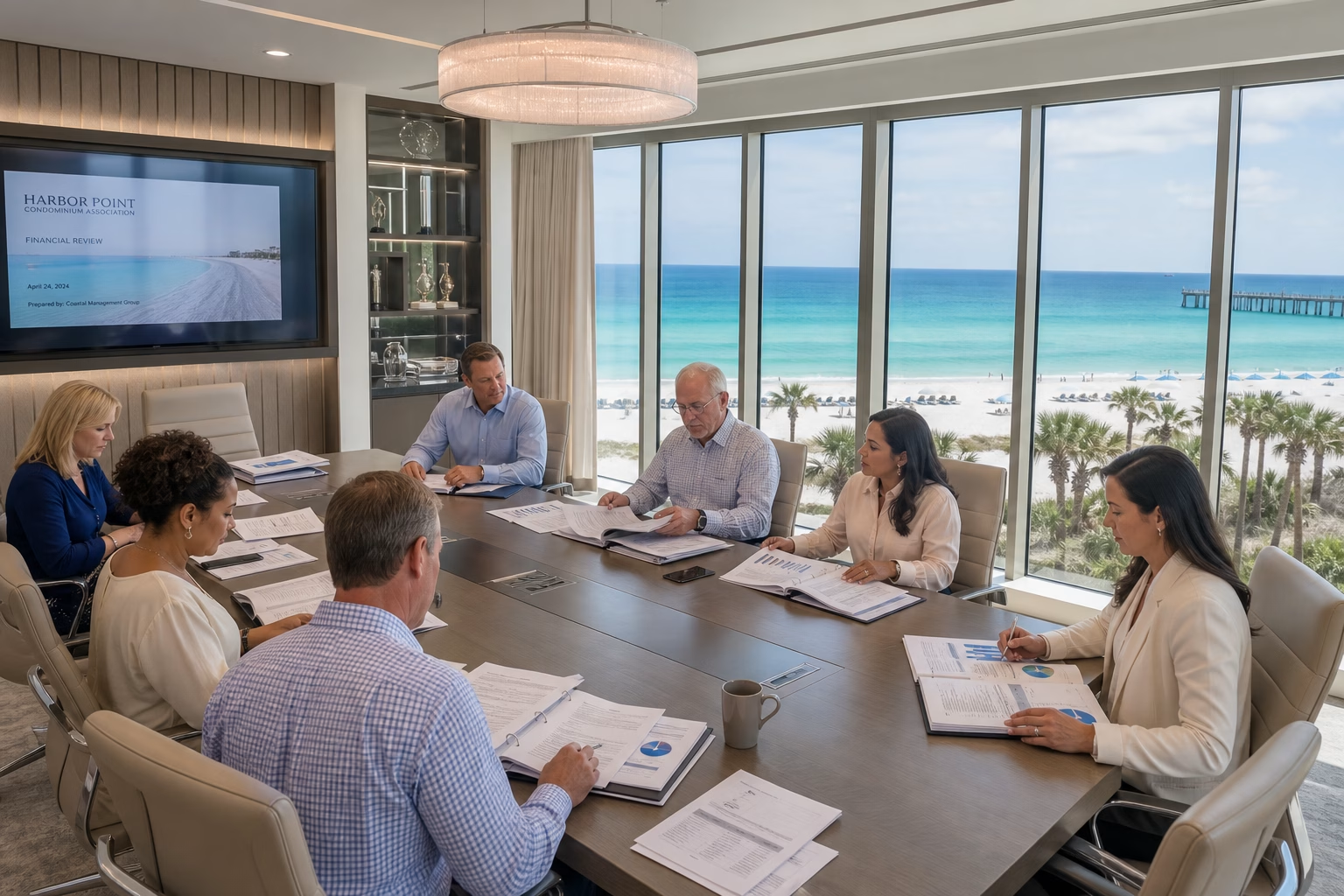
Why Franklin County boards feel budget pressure faster
Franklin County communities do not always have the same scale as larger Bay County or Walton County associations. A smaller owner base means fewer assessment dollars to absorb cost spikes. One insurance increase, one drainage repair, or one failed common-area component can change the budget picture quickly.
The local pressure points are familiar:
- Coastal exposure: Salt air, humidity, wind, and stormwater accelerate wear on roofs, exterior metals, decks, drainage, paving, and building systems.
- Limited contractor capacity: Specialized vendors may travel from larger markets, which can increase cost and scheduling delays.
- Insurance volatility: Boards may face premium increases, higher deductibles, or new documentation requirements tied to property condition.
- Owner sensitivity: Smaller communities often resist assessment increases until the need becomes urgent.
- Record gaps: Older associations may rely on email threads, paper files, or institutional memory instead of structured digital records.
This is where Maxet’s recovery-focused approach matters. A board cannot correct a budget with guesswork. It needs clean data, disciplined vendor follow-up, and a plan that separates real financial obligations from noise.
How Florida law affects budget correction decisions
Budget correction should follow the proper authority structure. Federal law may affect fair housing, collections, accessibility, employment, or lending issues. Florida statutes then set the statewide framework for association governance and financial obligations. County and municipal rules may affect local rentals, permitting, stormwater, nuisance issues, or code compliance. The association’s declaration, bylaws, articles, and rules then define the specific community obligations.
For most Franklin County HOA budget correction projects, the board should pay close attention to Florida Statute Chapter 720, the association’s governing documents, and any local rules that affect property operations. Condominium communities should also account for Florida Statute Chapter 718, especially where reserves, milestone inspections, structural integrity reserve studies, or building-safety obligations apply. Chapter 617 may matter for nonprofit corporate governance, and Chapter 468 governs community association manager licensing.
Maxet does not provide legal advice. The management role is to keep operations organized, surface financial facts, coordinate professional input, and help the board make decisions with better information. When statutory interpretation or document enforcement is unclear, the board should involve a Florida community association attorney.
FS 720 vs. FS 718 budget and reserve comparison
| Issue | HOAs: Florida Statute 720 | Condos: Florida Statute 718 |
|---|---|---|
| Primary budget focus | Common-area operations, maintenance duties, assessments, and obligations in the governing documents. | Building operations, common elements, reserves, statutory budget disclosures, and condo-specific safety obligations. |
| Reserve planning | Often driven heavily by governing documents and board/owner decisions, with statutory notice and budgeting requirements. | More prescriptive requirements may apply, especially for condominium reserves, structural components, SIRS, and milestone-related planning. |
| Special assessments | Authority and approval process depend on Chapter 720 and the association’s governing documents. | Authority and approval process depend on Chapter 718 and the condominium documents, with additional disclosure and budget considerations. |
| Risk of underfunding | Deferred common-area maintenance, owner frustration, collections pressure, and possible document-compliance disputes. | Deferred building maintenance, insurance problems, inspection pressure, reserve shortfalls, and heightened safety concerns. |
A practical budget correction roadmap
Boards do not need a 90-page report to start correcting a budget. They need a disciplined sequence. Maxet’s process is designed for board members who need to act, not just study the problem.
1. Confirm the actual financial position
The first step is to reconcile bank balances, year-to-date income, unpaid invoices, reserve balances, prepaid expenses, and delinquent assessments. If the board is looking at outdated financials, every decision after that is weaker.
Maxet’s tech-forward operations help here by moving association records into structured systems instead of scattered email chains. That gives the board cleaner reports, faster answers, and fewer surprises.
2. Separate operating shortfalls from reserve shortfalls
An operating shortfall means the association’s regular income is not covering routine expenses. A reserve shortfall means the association has not set aside enough for predictable capital repairs or replacements. Mixing those two problems together leads to bad decisions.
A board may be able to reduce waste in operations. It cannot negotiate away a roof, drainage failure, elevator modernization, seawall repair, or major pavement project forever.

3. Build a maintenance-risk list
Budget correction should include more than accounting. The board should identify the maintenance items most likely to create financial shock: roofs, drainage, pools, fencing, paving, elevators, fire systems, exterior paint, structural repairs, docks, lighting, gates, and storm-damaged assets.
Each item should be tagged by urgency, estimated cost range, vendor status, and whether it affects safety, insurance, compliance, owner access, or property value.
4. Review vendor contracts and performance
Vendor costs can drift when contracts renew without scope review. Boards should ask whether each vendor agreement is current, specific, measurable, and tied to actual property needs.
Maxet’s operational model focuses on vendor accountability: defined scope, documented follow-up, board-visible status, and better scheduling. That is not just convenience. It protects the budget.
5. Model the recovery options
Once the facts are clear, the board can compare options:
- Adjusting regular assessments.
- Reducing or rebidding operating costs.
- Phasing maintenance work by risk level.
- Using reserves where allowed and appropriate.
- Considering a special assessment when the documents and facts support it.
- Coordinating legal, engineering, accounting, or reserve-study input where needed.
The goal is not to make the cheapest choice. The goal is to make the decision the board can defend with records, numbers, and a clear owner communication plan.
Traditional management vs. Maxet’s tech-driven management
| Budget correction need | Traditional management pattern | Maxet’s tech-driven recovery approach |
|---|---|---|
| Financial visibility | Periodic reports reviewed after problems build up. | Cleaner records, faster issue tracking, and board-ready financial snapshots. |
| Maintenance planning | Reactive repairs after owner complaints or vendor alerts. | Risk-based maintenance lists tied to budget planning and vendor follow-up. |
| Vendor control | Contracts renew without scope discipline. | Documented scopes, accountability checkpoints, and cost review. |
| Owner communication | Budget increases explained late, often after frustration builds. | Plain-language recovery roadmap tied to property needs and board authority. |
| Board workload | Board members chase emails, invoices, and vendor updates manually. | Administrative support and organized workflows that reduce board drag. |
When a Franklin County board should start a budget correction review
A board should not wait for a failed component or angry annual meeting. Start a budget correction review when any of these signs show up:
- The association is using reserves to cover routine operating expenses.
- Insurance increases are forcing cuts in maintenance or administrative support.
- The board does not have current bids for major upcoming projects.
- Financial reports are late, unclear, or hard for board members to interpret.
- Deferred maintenance has become visible to owners, vendors, insurers, or local officials.
- Special assessments are being discussed without a clear written roadmap.
- The budget depends on optimistic collections assumptions.
If two or more of these are true, the budget is no longer just a financial document. It is a recovery project.
How this applies across Bay, Walton, and Franklin counties
Maxet’s primary market is Bay County, where coastal association operations often involve rental pressure, storm readiness, maintenance coordination, and board turnover. The same operational lessons apply in Walton and Franklin counties, but the scale and owner expectations can differ.
In Franklin County, the board may be dealing with smaller communities, tighter vendor access, and less administrative depth. In Walton County, luxury-market expectations and 30A property values can raise the stakes around reserves, curb appeal, and owner communication. In Bay County, Panama City Beach and surrounding communities often face a mix of short-term rental activity, coastal infrastructure needs, and high service expectations.
The correction method stays consistent: know the legal framework, confirm the numbers, identify the property risk, create a phased plan, and communicate before the crisis sets the tone.

What board members should ask before approving the next budget
- Does this budget reflect actual current costs, or last year’s assumptions?
- Are we funding maintenance based on visible property risk?
- Do our reserve contributions match predictable future projects?
- Which line items increased, and why?
- Are any expenses being delayed only because they are uncomfortable to discuss?
- Do we have the governing-document authority for the assessments or funding plan being considered?
- Can we explain the plan to owners in plain language?
Those questions are simple. They are also where many budget problems get exposed.
How Maxet helps boards move from budget drift to budget control
Maxet Management Group supports association boards that need more than routine administration. Our focus is operational efficiency, recovery planning, and board support for communities that need better systems.
For a Franklin County HOA, that can include:
- Organizing financial records so the board can see the real budget picture.
- Coordinating vendor bids and maintenance priorities.
- Tracking action items so budget decisions do not disappear between meetings.
- Preparing board-facing reports that connect expenses to property needs.
- Supporting owner communication around assessment changes or recovery projects.
- Helping the board coordinate with accountants, attorneys, engineers, reserve specialists, and insurance professionals when needed.
If your board is already discussing deferred maintenance, reserve pressure, or a special assessment, the right time to organize the recovery plan is before the next budget meeting.
Frequently asked questions
What is the first step in HOA budget correction?
The first step is confirming the association’s actual financial position. That means reconciled bank balances, current payables, delinquency status, reserve balances, vendor obligations, and a clear view of upcoming maintenance needs.
Does Florida Statute 720 require reserves for every HOA?
Not every HOA reserve question has the same answer. Chapter 720, the association’s governing documents, and owner approvals can all affect reserve obligations and budget decisions. Boards should confirm the legal requirements with association counsel when reserve authority or waiver questions are unclear.
When should a Franklin County HOA consider a special assessment?
A special assessment may be considered when regular assessments and available reserves cannot responsibly cover a necessary expense. Before moving forward, the board should verify its authority under the governing documents, understand any statutory notice requirements, and communicate the reason in plain language.
How can technology help fix an association budget?
Technology helps by reducing blind spots. Organized records, task tracking, vendor documentation, financial dashboards, and board-ready reporting make it easier to see problems early and act before costs escalate.
Talk with Maxet about budget recovery support
If your Franklin County association is dealing with budget drift, reserve pressure, deferred maintenance, or owner concern about rising assessments, Maxet can help the board build a practical recovery roadmap.
Contact Maxet Management Group to discuss association management support in Franklin County, Bay County, Walton County, and across Northwest Florida. You can also review our association management services and related guidance on HOA budget recovery management.
Legal disclaimer: Maxet is a professional community association management firm providing business operational efficiency and administrative support. We are not a law firm, and the information provided in this article does not constitute legal advice or create an attorney-client relationship. For specific legal interpretation of Florida Statutes or governing documents, we strongly recommend consulting with a licensed attorney specializing in Florida community association law.
Learn more about professional board management.