
Short answer: Bay County HOA boards should pre-authorize emergency roof tarping and remediation contracts before storm season, not after. By establishing vetted contractor relationships, setting spending caps, and documenting the board’s emergency powers under Florida Statute 720, boards can deploy tarps within hours of storm clearance instead of waiting days for an emergency meeting. The technology handles contractor verification and cost tracking, while the board provides the professional judgment and operational authorization.
Why Bay County HOA Boards Need Pre-Authorized Emergency Contracts
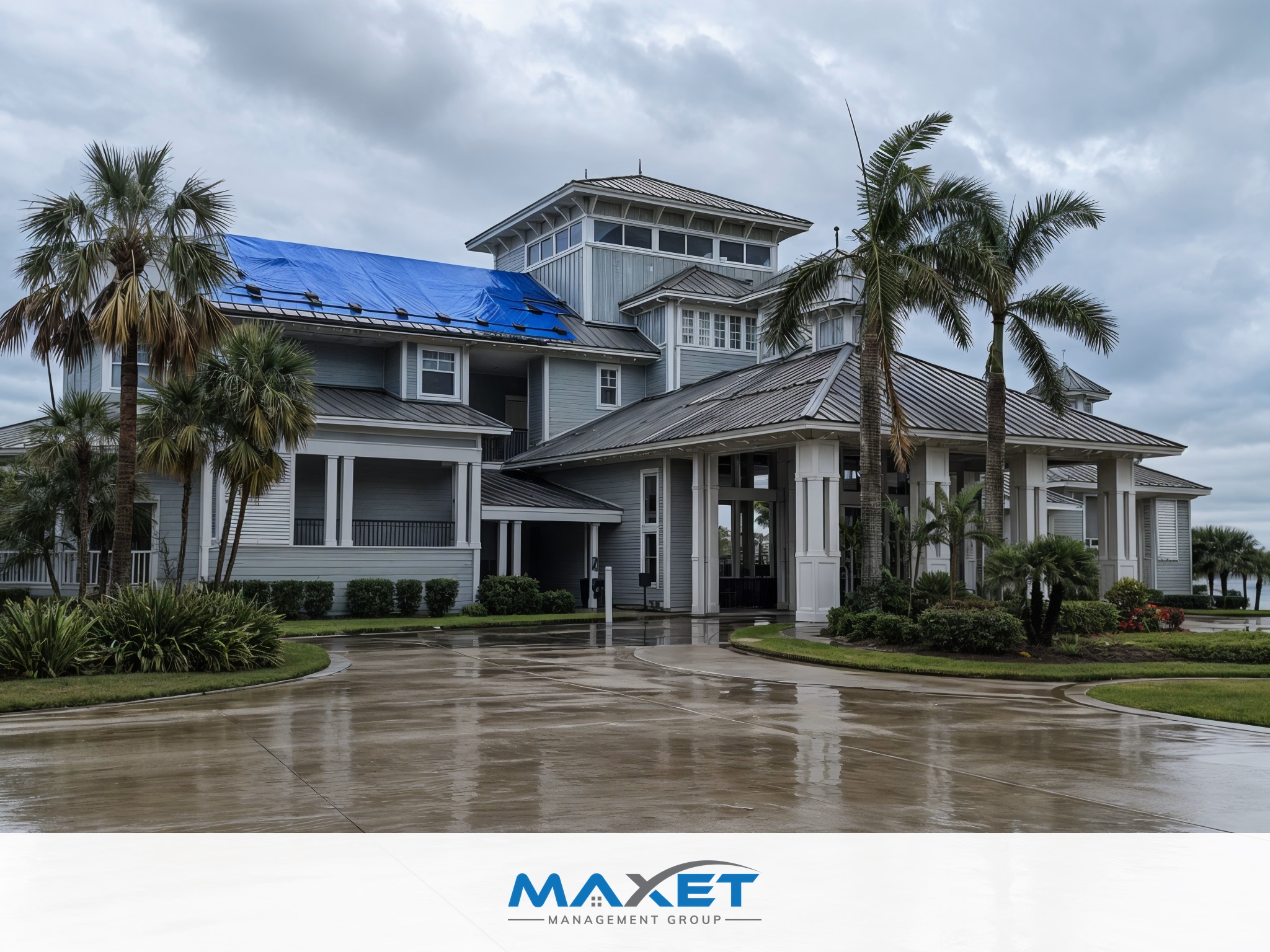
When a hurricane makes landfall near Panama City Beach, the window between storm passage and permanent repair can stretch into weeks or months. During that gap, exposed roofs allow water intrusion that compounds structural damage, invites mold colonization, and drives up the total remediation cost by 30 to 50 percent. A blue tarp applied within the first 48 hours can mean the difference between a manageable repair and a catastrophic one.
Yet most Bay County HOA boards have no pre-authorized emergency contract in place. When the storm clears, the board president is calling roofing companies that have 200 other communities ahead in the queue. The board scrambles to schedule an emergency meeting, debate vendor selection, and approve a spending cap while residents are reporting leaks through their ceilings. This is reactive crisis management, and it costs the association money, trust, and time.
What Pre-Authorization Actually Means for Your Board
Pre-authorization is not a blank check. It is a board-approved framework that defines who can act, what they can spend, and under what conditions, all before a storm threatens. A well-structured pre-authorization includes:
- Pre-vetted contractor list: Two to three licensed roofing contractors who have passed credential verification, insurance review, and reference checks, and who have signed master service agreements with the association.
- Spending caps: A board-approved ceiling for emergency tarping and initial remediation work, typically structured in tiers, with the property manager authorized to approve up to a set amount and the board president or treasurer authorized for a higher tier.
- Activation triggers: Clearly defined conditions that activate the pre-authorization, such as a named storm watch for Bay County, a wind event exceeding 50 mph, or visible roof damage confirmed by the property manager or a designated board member.
- Documentation protocol: Photo evidence of damage, work orders, contractor invoices, and board authorization records maintained in a centralized digital system for insurance claims and audit purposes.
- Insurance coordination: The pre-authorized contractor understands the association’s claims process and coordinates directly with the insurance adjuster to avoid duplicative work or denied reimbursements.

The Legal Framework: FS 720 and Emergency Powers
Florida Statute 720.3035 and the association’s governing documents define the board’s authority to act in emergencies. Under most HOA declarations, the board has emergency powers to contract for repairs that protect life, safety, and property without convening a full membership vote. However, the specific scope of these powers varies by association, and boards must verify their authority against their own declaration, articles of incorporation, and bylaws before relying on it.
The key legal principle is fiduciary duty. Under Florida law, board members owe a fiduciary duty to the association and its members. Failing to prepare for foreseeable emergencies, in a region where hurricane landfall is a near-annual event, can expose board members to claims of breach of fiduciary duty. Pre-authorization is not just operational efficiency; it is a fiduciary safeguard that demonstrates the board exercised reasonable care in protecting association assets.
FS 720 vs FS 718: Emergency Powers Comparison
Bay County has both HOA-governed communities (FS 720) and condominium associations (FS 718). The emergency powers and contracting requirements differ:
| Aspect | FS 720 (HOA) | FS 718 (Condo) |
|---|---|---|
| Emergency Powers | Board may act under declaration’s emergency provisions; statute does not enumerate specific emergency powers | FS 718.1265 grants specific emergency powers to board, including contracting for repairs |
| Contracting Authority | Governing documents define who may bind the association | Board or its designated agent may contract for emergency protective measures |
| Member Notice | Notice requirements may be waived in emergencies per governing docs | Emergency action does not require prior member notice |
| Insurance Coordination | Board coordinates with property/casualty carrier | Board coordinates with master policy carrier; unit owners file separately |
| Reserve Access | Board may access reserves for emergency repairs subject to governing doc limits | Board may borrow from reserves for emergency repairs with repayment plan |
Traditional Management vs Maxet’s Tech-Driven Management
| Traditional Management | Maxet’s Tech-Driven Management |
|---|---|
| Phone-tree contractor search after storm clears | Pre-vetted contractor roster with signed MSAs, activated by property manager |
| Paper work orders and manual invoice tracking | Digital work orders with photo documentation and automatic cost tracking |
| Emergency board meeting called days after storm | Pre-authorized spending tiers activate on defined triggers without a meeting |
| Insurance claims filed from scattered records | Centralized damage documentation ready for adjuster coordination |
| Reserve access debated under pressure | Reserve access pre-approved by board with documented repayment plan |

The 5-Step Pre-Authorization Roadmap for Bay County Boards
Step 1: Vet and Contract Emergency Contractors Before June 1
Identify two to three licensed Florida roofing contractors who serve Bay County and specialize in emergency tarping and storm remediation. Verify their license status with the Florida Department of Business and Professional Regulation, confirm general liability and workers’ compensation coverage, and check references from other HOA communities in Panama City Beach, Lynn Haven, or Panama City. Execute a master service agreement that defines scope, pricing, response time, and documentation requirements before storm season begins on June 1.
Step 2: Define Activation Triggers and Spending Tiers
The board should adopt a resolution that defines specific conditions under which the pre-authorization activates. Common triggers include a tropical storm or hurricane watch issued for Bay County, sustained winds exceeding 50 mph at the community, or confirmed structural damage reported by the property manager. The resolution should establish spending tiers, for example: the property manager may authorize up to $5,000 per building for emergency tarping without further approval; the board president or treasurer may authorize up to $15,000; and amounts exceeding that threshold require a quorum vote of the board, which can be conducted electronically under most governing documents.
Step 3: Establish a Digital Documentation Protocol
Every emergency repair should be documented with before-and-after photographs, a written scope of work, contractor invoices, and board authorization records. This documentation serves three purposes: it supports insurance claims, it provides an audit trail for fiduciary compliance, and it creates a historical record that informs future reserve studies and maintenance planning. The technology handles the data synthesis, organizing photos, invoices, and work orders into a single recoverable file, while the manager provides the professional judgment and operational verification that the work was performed correctly.
Step 4: Coordinate With the Insurance Carrier in Advance
Contact the association’s property and casualty insurance carrier before storm season and ask about their emergency remediation requirements. Some carriers require pre-approval before authorizing emergency work, while others accept post-event documentation if the contractor follows specific billing protocols. Share the pre-authorized contractor list with the carrier so that the adjuster can verify the contractor’s credentials in advance, reducing the likelihood of a disputed claim.
Step 5: Review and Rehearse Annually
Review the pre-authorization framework at the May board meeting each year, before hurricane season. Confirm that contractor licenses and insurance certificates are current, that spending caps reflect current construction costs, and that the property manager and board officers understand their roles. A tabletop exercise, walking through a hypothetical storm scenario, can surface gaps before they become expensive problems.
Common Pitfalls Bay County Boards Should Avoid
- Waiting for the storm to vet contractors: By the time a hurricane is in the Gulf, every licensed roofer in Bay County is already committed. Pre-vetting in March or April is the only way to guarantee availability.
- No spending cap in the resolution: Without a defined ceiling, the property manager or board president may authorize more than the board intended, or hesitate to act at all because the authorization is ambiguous.
- Failing to coordinate with the insurance carrier: Emergency work performed outside the carrier’s protocol can result in denied reimbursement, leaving the association to absorb the full cost.
- Documentation that exists only on paper: Paper records stored in a clubhouse filing cabinet can be destroyed by the same storm that damaged the roof. Digital documentation stored in the cloud is recoverable from anywhere.
- Reserve access without a repayment plan: Borrowing from reserves without a board-approved repayment schedule can create a reserve shortfall that triggers audit findings and member disputes.
Frequently Asked Questions
Can an HOA board authorize emergency repairs without a full membership vote?
In most cases, yes. Florida HOA governing documents typically grant the board emergency powers to contract for repairs that protect life, safety, and property without a membership vote. However, the specific scope depends on the declaration and bylaws. Boards should confirm their authority in advance and document the legal basis for any emergency action taken.
How much should a Bay County HOA budget for emergency roof tarping?
Emergency tarping for a typical clubhouse or common-area building in Bay County ranges from $1,500 to $5,000 per structure, depending on roof size and accessibility. Boards should budget for at least two buildings and set a pre-authorized spending cap that covers the realistic worst-case scenario for their community’s footprint.
What happens if the pre-authorized contractor is unavailable after a storm?
This is why the framework calls for two to three pre-vetted contractors. If the primary contractor is committed elsewhere, the property manager contacts the second or third on the list. The master service agreement should include a response-time commitment and a provision for sub-contractor delegation if the primary contractor cannot meet the timeline.
Does pre-authorization replace the insurance claim process?
No. Pre-authorization is the board’s internal contracting framework. The insurance claim is a separate process filed with the carrier. Pre-authorization ensures the emergency work is performed quickly and documented thoroughly, which strengthens the insurance claim and reduces the likelihood of disputes over scope or cost.
Take Action Before the Next Storm
Bay County HOA boards that wait until a storm is in the Gulf to think about emergency remediation are already behind. Pre-authorizing roof tarping and remediation contracts is a fiduciary responsibility, not a luxury. The board’s job is to set the framework, define the spending limits, and select the contractors. The property manager’s job is to execute the framework when the trigger conditions are met. The technology handles the documentation and cost tracking, while the board provides the professional judgment and operational authorization.
If your current management company has not presented a pre-authorization framework for emergency storm response, that gap is itself a signal. Maxet builds these frameworks for Bay County associations as a standard part of community management, not an add-on service. The difference between a board that is ready and a board that is scrambling is visible in the first 48 hours after a storm, and it shows up in the insurance claim, the repair cost, and the trust residents place in their board.
Legal disclaimer: Maxet is a professional community association management firm providing business operational efficiency and administrative support. We are not a law firm, and the information provided in this article does not constitute legal advice or create an attorney-client relationship. For specific legal interpretation of Florida Statutes or governing documents, we strongly recommend consulting with a licensed attorney specializing in Florida community association law.