
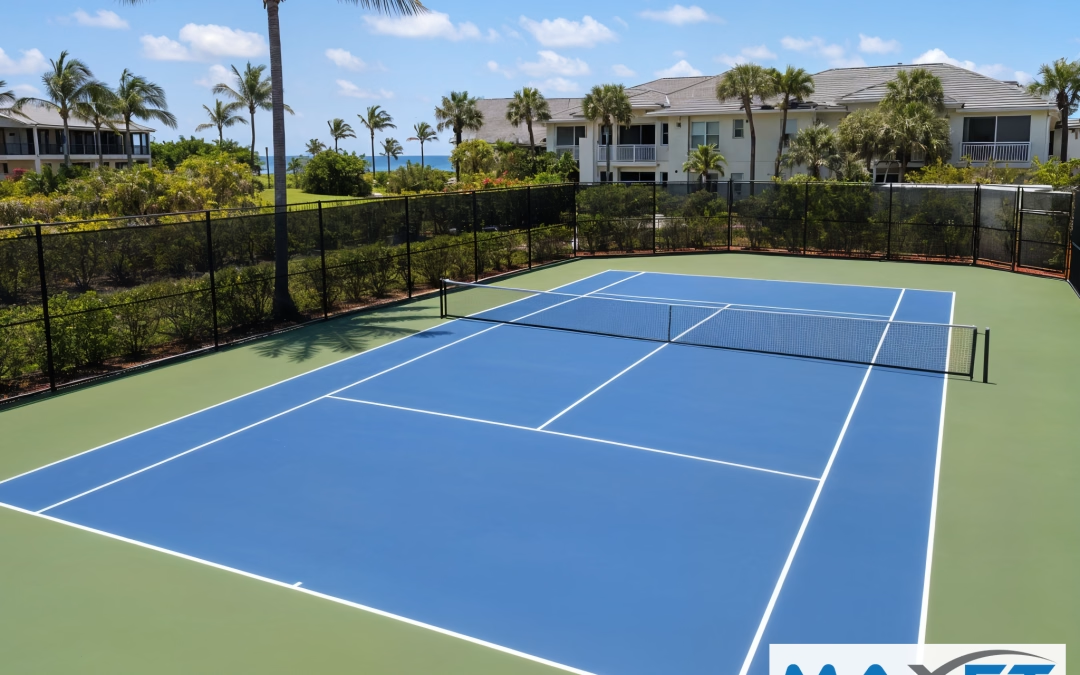
Short answer: Basketball and tennis court resurfacing is a planned capital expense, not an emergency repair. Bay County HOA boards should implement a 5-to-7-year lifecycle schedule that combines annual condition assessments, predictive deterioration modeling, and competitive vendor benchmarking to avoid the 40-60% cost premium that comes with reactive maintenance. Technology-driven lifecycle planning turns a surprise special assessment into a line-item reserve contribution.
Why Bay County HOA Boards Keep Getting Court Resurfacing Wrong
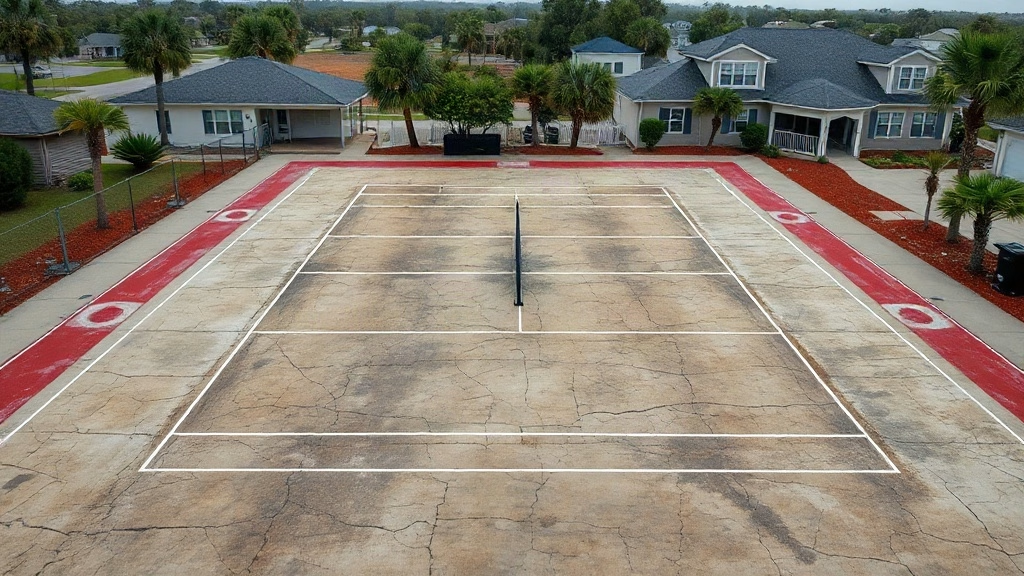
Recreation courts are among the most visible assets in a Bay County community, yet they are consistently the most mismanaged. Boards inherit cracked, fading surfaces, wait until a resident complains, then scramble to find a contractor who can “fix it quickly.” That urgency costs money. A reactive resurfacing project in Panama City Beach or Lynn Haven routinely runs 40-60% more than a planned project because the board has no time to solicit competitive bids, no reserve funds earmarked, and no negotiating power to drive scope.
The pattern is familiar: a board member notices cracks during a walkthrough, raises it at the next meeting, the property manager says “we’ll get a quote,” and three months later a $35,000 invoice arrives with no benchmark for whether the price is fair. This is the legacy management model that treats capital assets as unpredictable events rather than scheduled maintenance with a predictable deterioration curve.
Bay County’s coastal climate accelerates court surface degradation. UV exposure, salt air, humidity cycling, and hurricane-season storm water infiltration all shorten the useful life of acrylic and asphalt surfaces. A court inland might last 7-8 years between resurfacings; the same court in Panama City Beach or Mexico Beach may need attention at year 5. Boards that apply generic Florida timelines to coastal Bay County assets are setting their reserves up for a shortfall.
The Tech-Driven Approach: Lifecycle Planning Instead of Crisis Reaction
Maxet replaces the reactive model with a structured lifecycle planning system that treats court surfaces the same way a facilities manager treats a roof or an elevator: a depreciable asset with a known condition curve, a scheduled intervention point, and a funded reserve line item.
The technology handles the data synthesis: condition scores from annual inspections, deterioration trend lines extrapolated from historical data, and vendor performance benchmarks from comparable Bay County projects. The manager provides the professional judgment and operational execution: interpreting the data for the board, negotiating contract terms, and overseeing the resurfacing project to specification.

The Four-Phase Court Asset Lifecycle
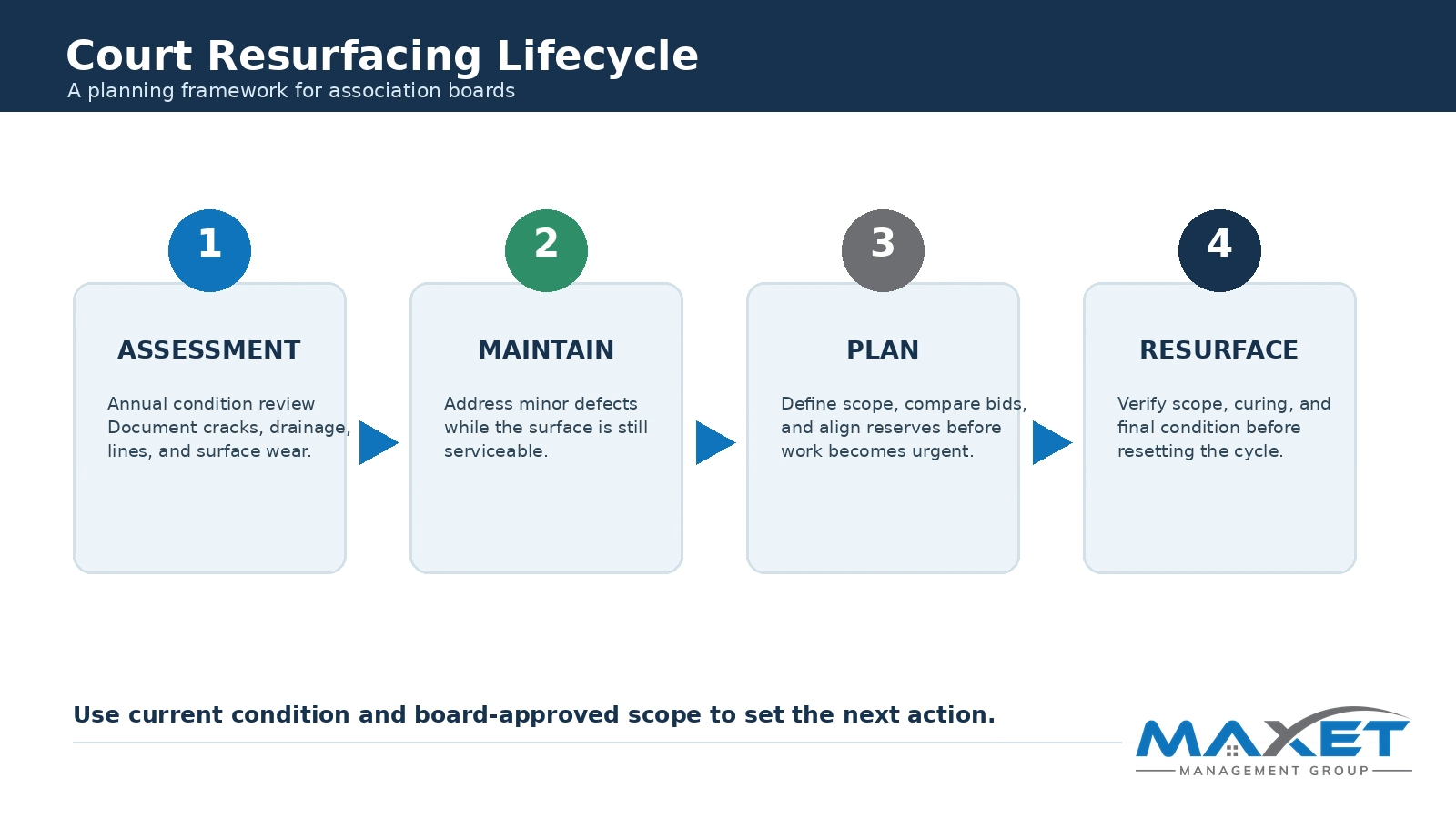
A structured lifecycle approach breaks court management into four phases, each with specific board actions and budget implications:
- Assessment (Year 1-2): Annual condition scoring using standardized criteria: crack width, surface delamination, color fading, line visibility, drainage function. Each court receives a 1-10 condition score. Technology tracks score degradation year over year to predict the intervention point.
- Maintenance (Year 2-4): Preventive treatments: crack filling, color coating refresh, line repainting. These extend the surface life at 10-15% of full resurfacing cost. The reserve study should reflect this as a recurring maintenance line, not a capital project.
- Planning (Year 4-5): When the condition score drops below 5, the board enters the planning window. This is where competitive bidding happens: three to five vendors, scoped specifications, and benchmark pricing from comparable Bay County projects. The board approves the project and funds it from reserves, not a special assessment.
- Execution (Year 5-7): Resurfacing project execution with vendor oversight, quality verification, and post-project condition scoring to reset the lifecycle baseline.
What Bay County Boards Should Demand From Their Management Company
Most HOA management companies in Northwest Florida do not track court condition scores. They do not maintain vendor benchmarking databases. They do not integrate court lifecycle planning into the reserve study. Boards should demand evidence of all three before accepting “we’ll handle it” as an answer.
Specific deliverables a board should require:
- Annual condition assessment report with photographic evidence and a numeric score for each court surface in the community.
- Deterioration trend analysis showing the projected year for resurfacing based on the current condition curve, not a generic timeline.
- Reserve study integration that reflects the actual projected resurfacing cost for each court, adjusted for Bay County coastal conditions.
- Vendor benchmarking data from at least three comparable Bay County projects so the board can evaluate whether a quoted price is competitive.
- Contract scope specification that defines materials, surface preparation standards, curing requirements, and warranty terms before bids are solicited.
If the current management company cannot produce these deliverables, the board is flying blind on a capital asset that will eventually cost $25,000 to $50,000 per court to replace.
Traditional Management vs. Maxet’s Tech-Driven Management
| Factor | Traditional Management | Maxet Tech-Driven Approach |
|---|---|---|
| Condition tracking | Visual inspection when complaints arise | Annual numeric scoring with trend analysis |
| Resurfacing trigger | Resident complaint or visible failure | Condition score threshold with 12-month planning window |
| Vendor selection | Single quote from familiar contractor | 3-5 competitive bids with benchmark pricing |
| Funding source | Special assessment when crisis hits | Reserve line item funded over the lifecycle |
| Coastal adjustment | Generic Florida timeline | Bay County coastal degradation factors applied |
| Cost outcome | 40-60% premium from urgency | Planned cost with competitive pricing |
FS 720 vs FS 718: Reserve Funding Obligations for Court Assets
Court resurfacing falls under the reserve funding framework that differs between Florida’s two primary community association statutes. Bay County boards must understand which statute governs their association and what it requires for recreational asset reserves.
| Requirement | FS 720 (HOAs) | FS 718 (Condominiums) |
|---|---|---|
| Reserve study requirement | Not mandated by statute; recommended as fiduciary best practice | Required; SIRS for buildings 3+ stories, reserve study for all |
| Recreational asset inclusion | Board discretion; strong fiduciary argument for inclusion | Required for common elements including recreation courts |
| Reserve funding waiver | Majority vote can reduce/eliminate reserves annually | Stricter post-SB 154; structural reserves cannot be waived |
| Fiduciary exposure | Board faces breach of fiduciary duty claims if deferred maintenance results from reserve neglect | Statutory compliance failure plus fiduciary exposure |
Under FS 720.303(6), HOA boards have a fiduciary obligation to maintain common areas, which includes recreation courts. While the statute does not mandate a formal reserve study for HOAs the way FS 718 does for condominiums, a board that fails to fund court resurfacing and then imposes a special assessment is exposing itself to a breach of fiduciary duty claim. The defense “we did not know the courts were deteriorating” is not credible when a structured assessment program could have predicted the expense years in advance.
Under FS 718.112(2)(g) and the post-SB 154 framework, condominium associations face stricter reserve requirements. Recreation courts that are common elements must be included in the reserve schedule. A condominium board in Bay County that defers court resurfacing without a documented funding plan is creating a compliance gap that a unit owner or the DBPR can challenge.
The Cost of Inaction: A Bay County Case Comparison
Consider two Bay County communities with identical court assets built in the same year:
Community A (Reactive): No condition tracking. At year 6, a resident files a complaint about cracks and tripping hazards. The board panics, gets one quote for $42,000, and passes a special assessment. The project starts in July during peak contractor demand, adding a 15% premium. Total cost: $48,000, funded by a $480 special assessment per unit in a 100-unit community.
Community B (Lifecycle Planned): Annual condition scoring starts at year 1. At year 4, the trend analysis flags the courts for resurfacing in year 5. The board solicits five bids, benchmarks pricing against comparable Bay County projects, and selects a vendor at $31,000. The project is scheduled for October during off-peak pricing. Reserve contributions of $5,200 per year since year 1 cover the cost with no special assessment. Total cost: $31,000, fully funded from reserves.
The difference: $17,000 in project costs plus $480 per unit in special assessments, entirely attributable to the absence of lifecycle planning. Over a 20-year period with two resurfacing cycles, the gap compounds to $34,000+ in avoidable spending.
How Technology Enables Predictive Court Management
The tools that make lifecycle planning practical for Bay County boards did not exist in the legacy management model. A modern approach uses:
- Condition scoring dashboards: Each court surface gets a numeric score updated annually, with a visual trend line that the board can review at any time without requesting a report.
- Predictive deterioration modeling: Historical condition data feeds a deterioration curve that projects the resurfacing window 12-24 months in advance, giving the board time to plan and budget.
- Vendor benchmarking databases: Actual project costs from comparable Bay County communities create a pricing reference point, eliminating the “is this quote fair?” uncertainty.
- Reserve integration: The projected resurfacing cost and timeline feed directly into the reserve study, so the funding plan reflects the real asset condition rather than a generic depreciation schedule.
The technology handles the data synthesis and benchmarking calculations, while the manager provides the professional judgment and operational execution. The board makes informed decisions based on evidence, not guesses.
Frequently Asked Questions
How often should Bay County HOA courts be resurfaced?
In Bay County’s coastal climate, acrylic court surfaces typically last 5-7 years between full resurfacings, compared to 7-8 years inland. However, the actual interval depends on usage intensity, drainage quality, and preventive maintenance. Annual condition scoring provides the specific timeline for each court rather than relying on a generic estimate.
Can a Bay County HOA board waive reserve funding for recreation courts?
Under FS 720, an HOA board can vote to reduce reserves annually, but doing so for a known deteriorating asset creates fiduciary exposure. Under FS 718, condominium boards face stricter post-SB 154 reserve requirements that limit waiver authority for common elements. Boards should consult their association attorney before reducing reserve contributions for any asset with a documented deterioration timeline.
What does court resurfacing cost in Bay County?
A full tennis or basketball court resurfacing in Bay County typically ranges from $25,000 to $50,000 depending on court size, surface condition, drainage work needed, and contractor availability. Planned projects with competitive bidding tend to land at the lower end; reactive emergency projects tend to land at the higher end. Preventive maintenance (crack filling, coating refresh) costs $3,000-$7,000 and can extend the surface life by 2-3 years.
How does Maxet’s court lifecycle planning differ from what our current manager does?
Most legacy managers treat court resurfacing as an event that happens when someone complains. Maxet treats it as a scheduled capital project with a condition-scored lifecycle, competitive vendor benchmarking, and reserve-integrated funding. The board receives predictive data 12-24 months before intervention, not a surprise invoice after the surface has already failed.
Next Steps for Bay County Boards
If your Bay County association has basketball or tennis courts that have not been formally assessed in the last 12 months, the first step is a condition evaluation. Maxet provides a no-obligation court asset assessment that includes condition scoring, a deterioration timeline, and a projected resurfacing cost benchmark for Bay County market rates.
Contact Maxet to schedule a court condition assessment and see how lifecycle planning transforms recreation asset management from a recurring crisis into a predictable, funded capital project.
Legal disclaimer: Maxet is a professional community association management firm providing business operational efficiency and administrative support. We are not a law firm, and the information provided in this article does not constitute legal advice or create an attorney-client relationship. For specific legal interpretation of Florida Statutes or governing documents, we strongly recommend consulting with a licensed attorney specializing in Florida community association law.