
Short answer: Bay County condominium boards have a fiduciary duty to maintain elevators in safe, code-compliant condition — but many inherited systems are aging past their useful service life with no funded replacement plan. A tech-driven elevator modernization program pairs a formal lifecycle assessment with a dedicated reserve funding schedule and automated inspection tracking, so the board can replace failing systems before they become a safety liability or a six-figure emergency special assessment.
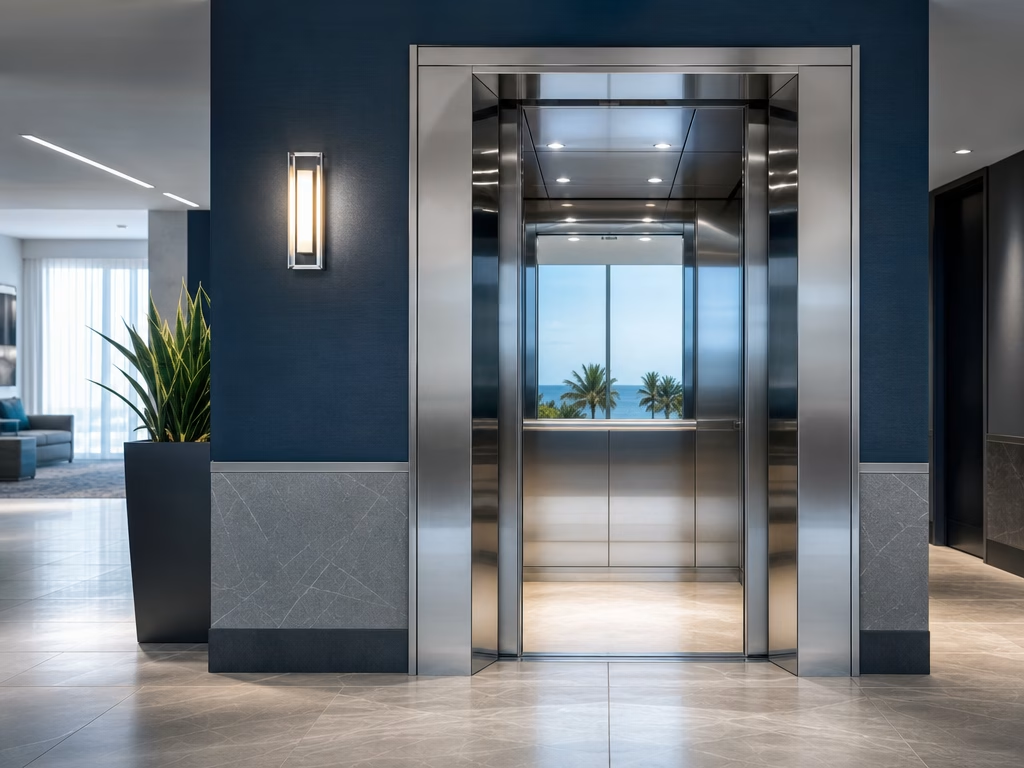
Elevator failure in a coastal condominium is not a question of if, but when. Salt air, humidity, and constant use age elevator systems faster in Panama City Beach and Bay County than in inland communities. Boards that defer modernization until a system fails face emergency repair bills, resident displacement, and potential code violations. The board that plans ahead controls the timeline and the budget. The board that waits loses both.
What Elevator Modernization Means for Bay County Condo Boards
Elevator modernization is the process of upgrading or replacing aging elevator systems — including the controller, motor, fixtures, cab interior, and safety devices — to meet current code and restore reliable service. In Bay County, where many condominium buildings along Front Beach Road and Thomas Drive were constructed in the 1980s and 1990s, original elevator systems are reaching or have exceeded their 25-30 year service life.
Modernization is not a cosmetic upgrade. It addresses mechanical wear, outdated safety circuits, obsolete parts availability, and code compliance gaps that accumulate over decades. Florida Statute 399 and ASME A17.1 establish the regulatory framework for elevator inspection and safety in the state. The Florida Department of Economic Opportunity and local Bay County building officials enforce these requirements.
Key Components of a Modernization Project
A complete elevator modernization project for a Bay County condominium typically involves:
- Controller replacement: Upgrading from relay-based logic to modern microprocessor controllers that improve reliability and enable remote monitoring.
- Motor and drive modernization: Replacing aging AC motors with variable-frequency drives that reduce energy consumption and provide smoother operation.
- Safety system upgrades: Installing current door sensors, emergency lighting, fire-service recall, and backup power interfaces.
- Cab renovation: Replacing interior panels, lighting, flooring, and handrails to meet ADA requirements and improve resident experience.
- Code compliance corrections: Addressing any gaps between the original installation code and current ASME A17.1 requirements.
Why Bay County Boards Face Unique Elevator Risks
Coastal Bay County condominiums face environmental conditions that accelerate elevator deterioration. Salt-laden air from the Gulf of Mexico corrodes electrical contacts, door tracks, and structural components. High humidity condenses inside hoistways and machine rooms, degrading electronics and hydraulic systems. Hurricane storm surge and wind-driven rain can flood ground-level machine rooms, destroying controllers and motors in hours.
These conditions mean that the standard 25-30 year elevator lifecycle published by manufacturers often does not hold for Bay County properties. Boards should expect accelerated wear and plan modernization cycles on a 20-25 year horizon, with major component replacements at 15 years.
The Cost of Deferral
When a board defers elevator modernization, the costs compound:
- Emergency repairs: A failed controller on an obsolete system can take weeks to source parts, during which the elevator is out of service. Emergency repair bills routinely run 40-60% higher than planned modernization costs.
- Special assessments: An unfunded $80,000-$150,000 elevator replacement triggers a special assessment that strains owner relationships and invites delinquency.
- Safety liability: An elevator that fails inspection or injures a resident exposes the board to claims of fiduciary breach for deferred maintenance.
- Insurance impact: Repeated elevator claims or code violations can affect insurability and premium negotiations for the association.
How to Build a Tech-Driven Elevator Modernization Plan
A tech-driven approach replaces the legacy “wait until it breaks” model with a proactive lifecycle management system. The technology handles the data synthesis — tracking inspection dates, repair histories, and reserve balances — while the board and manager provide the professional judgment and operational execution.
Step 1: Commission a Lifecycle Assessment
Hire a certified elevator consultant (not the service contractor) to perform a full lifecycle assessment of every elevator in the building. The assessment should include the age and condition of every major component, remaining service life estimates, code compliance gaps, and a prioritized replacement schedule. This document becomes the foundation for the reserve study and the modernization budget.
Step 2: Fund the Replacement Through Reserves
Work with your reserve study provider to model the elevator replacement cost and timeline identified in the lifecycle assessment. The reserve study should reflect the accelerated coastal wear reality — not the manufacturer’s generic 30-year estimate. A dedicated line item in the reserve fund ensures the money is available when the modernization is needed, avoiding a special assessment.
Step 3: Automate Inspection and Compliance Tracking
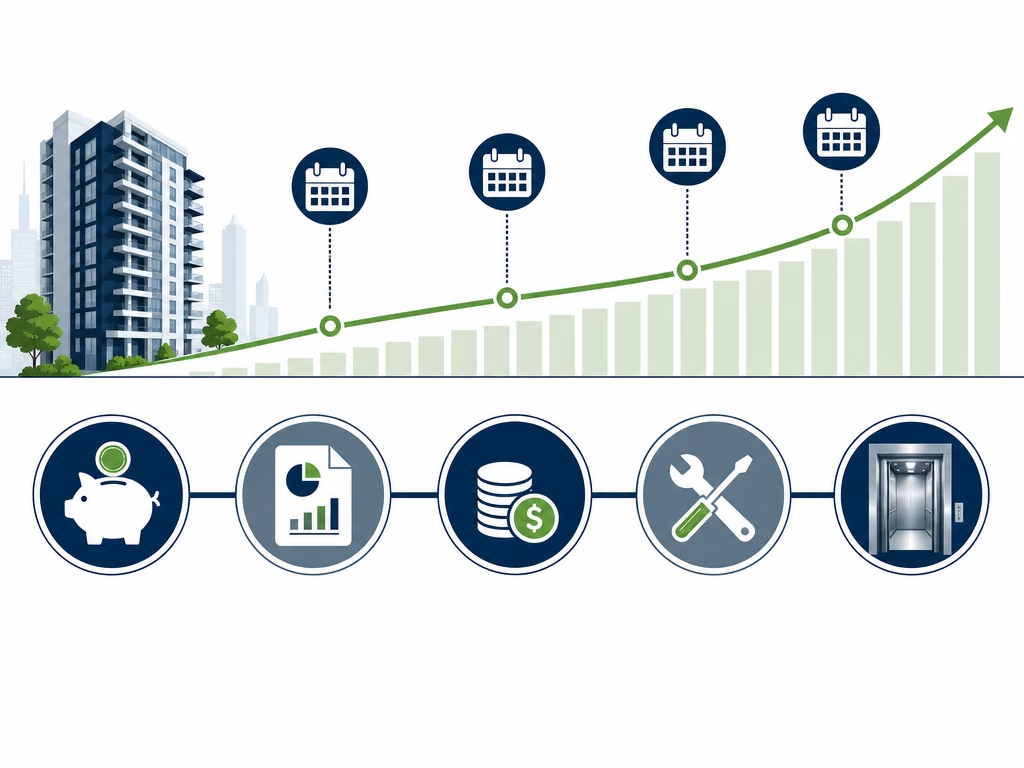
Florida Statute 399 requires annual elevator inspections. A modern association management platform can automate the tracking of inspection certificates, renewal deadlines, and service contract milestones. Instead of relying on a filing cabinet or a manager’s memory, the board receives automated alerts 90, 60, and 30 days before each compliance deadline. This eliminates the risk of a lapsed inspection certificate and the fines that follow.
Step 4: Implement Remote Monitoring
Modern elevator controllers support remote monitoring, which transmits real-time diagnostic data to the service contractor. This enables predictive maintenance — the contractor can identify a failing component before it causes an outage and schedule the repair during normal business hours. For Bay County condos with second-floor-and-up residents, elevator downtime is not just an inconvenience; it is an accessibility and safety issue.
Step 5: Bid the Modernization Project Properly
When the lifecycle assessment indicates modernization is needed, solicit competitive bids from at least three Florida-licensed elevator contractors. Require each bid to itemize the controller, motor, fixtures, cab work, and code corrections separately. This allows the board to compare bids line-by-line and identify inflated or unnecessary scope. The manager’s role is to facilitate the bidding process and verify contractor licensure — not to select the contractor unilaterally.
Traditional Management vs. Maxet’s Tech-Driven Management
| Aspect | Traditional Management | Maxet’s Tech-Driven Management |
|---|---|---|
| Inspection tracking | Paper file, manual calendar, manager memory | Automated deadline alerts 90/60/30 days out |
| Lifecycle planning | Reactive — replace when it fails | Proactive — lifecycle assessment drives reserve funding |
| Repair history | Scattered invoices in file folders | Digital service log with cost tracking and trend analysis |
| Reserve funding | Generic 30-year estimate | Coastal-adjusted 20-25 year model from on-site assessment |
| Contractor oversight | Single vendor relationship, no benchmarking | Competitive bidding with line-item comparison |
| Compliance evidence | Certificate in a binder | Digital compliance dashboard with audit trail |
FS 720 vs FS 718: Elevator Compliance Differences
| Requirement | FS 718 (Condominiums) | FS 720 (HOAs) |
|---|---|---|
| Maintenance responsibility | Association maintains common elements including elevators | Depends on governing docs; typically association for common areas |
| Reserve study requirement | Mandatory for buildings 3+ stories (SB 154 / SIRS) | Recommended but structure varies by governing docs |
| Inspection compliance | FS 399 annual inspection — association responsible | FS 399 applies if elevators exist in common areas |
| Fiduciary duty standard | Board owes fiduciary duty to unit owners for common element safety | Board owes fiduciary duty to members for common area safety |
| Special assessment authority | Available but should be avoided through proper reserves | Available per governing docs; same reserve principle applies |
For Bay County condominium associations, FS 718 places clear responsibility for elevator maintenance and safety on the association’s board. The board cannot delegate the fiduciary duty — it can delegate the work to a contractor, but the board remains accountable for ensuring the work is done correctly and on time.
What Bay County Boards Should Demand From Their Manager
If your association is in Panama City Beach, Panama City, or anywhere in Bay County, your management company should be able to answer these questions without hesitation:
- When was the last elevator inspection, and is the current certificate on file?
- How old is each elevator system, and what is the estimated remaining service life?
- Is there a dedicated reserve line item for elevator replacement, and is it funded to the lifecycle assessment’s timeline?
- What is the total repair cost history for each elevator over the last five years?
- Are there automated alerts for upcoming inspection deadlines and service contract renewals?
If your current manager cannot answer these questions quickly and with documentation, that is a sign of reactive management — not the professional standard your board should accept. The technology exists to track every one of these data points automatically. The question is whether your management company has invested in it.
The Sovereign AI Advantage in Elevator Lifecycle Management
Artificial intelligence is not a replacement for professional judgment in elevator modernization decisions. The technology handles the data synthesis — aggregating inspection records, repair histories, reserve balances, and vendor performance metrics into a single board-ready dashboard. The manager provides the professional judgment and operational execution — interpreting the data, advising the board on timing and scope, and overseeing the contractor relationship.
This division of labor matters because elevator modernization involves fiduciary decisions that a board cannot delegate to software. When to replace versus repair, how to scope the project, which contractor to select, and how to phase the work around resident impact — these require human judgment informed by the data the technology provides. The technology handles the data synthesis, while the manager provides the professional judgment and operational execution.
Frequently Asked Questions
How often should a Bay County condo association inspect its elevators?
Florida Statute 399 requires annual elevator safety inspections by a certified inspector. Bay County condominiums should also schedule a separate periodic modernization assessment every 5-7 years to identify components approaching end of life before they fail inspection.
How much should an association reserve for elevator replacement?
Replacement costs vary by building height and system type, but a typical two-to-three stop hydraulic elevator modernization in Bay County runs $60,000 to $120,000. A traction elevator in a high-rise can exceed $200,000. The reserve study should reflect the actual lifecycle assessment, not a generic industry average.
Can a Bay County condo board be held liable for an elevator accident caused by deferred maintenance?
Yes. Under FS 718, the board has a fiduciary duty to maintain common elements in safe condition. If an elevator injury occurs and the board has a documented history of deferring inspections or ignoring consultant recommendations, the board members may face personal liability exposure. Proper documentation of inspections, assessments, and funding decisions is the board’s primary defense.
What is the difference between elevator repair and elevator modernization?
Repair fixes a specific component failure to restore immediate function. Modernization replaces the major systems — controller, motor, safety circuits — to bring the elevator up to current code and extend its service life by another 20-25 years. Repair is reactive; modernization is strategic.
A Local Resource for the Vacation Rental Side
Maxet’s role is community association management — we do not manage vacation rentals. However, many Bay County condominium associations have owners who rent their units short-term. For those owners, Vacations Perfected provides dedicated vacation rental property management services along Panama City Beach. If your association is working through elevator modernization while owners continue renting, coordinating the construction timeline with rental schedules can minimize disruption — and that coordination is easier when both sides have professional management.
Elevator planning is one part of the asset oversight boards should expect from a Bay County condominium management partner.
Legal disclaimer: Maxet is a professional community association management firm providing business operational efficiency and administrative support. We are not a law firm, and the information provided in this article does not constitute legal advice or create an attorney-client relationship. For specific legal interpretation of Florida Statutes or governing documents, we strongly recommend consulting with a licensed attorney specializing in Florida community association law.