
Short answer: Bay County boards can replace paper proxy chaos with a verified digital proxy system that confirms owner identity, tracks quorum in real time, and produces an audit trail for every vote cast. The technology handles data synthesis and validation, while the manager provides professional judgment and operational execution under Florida Statutes 720.306(8) and 718.112(2)(b).
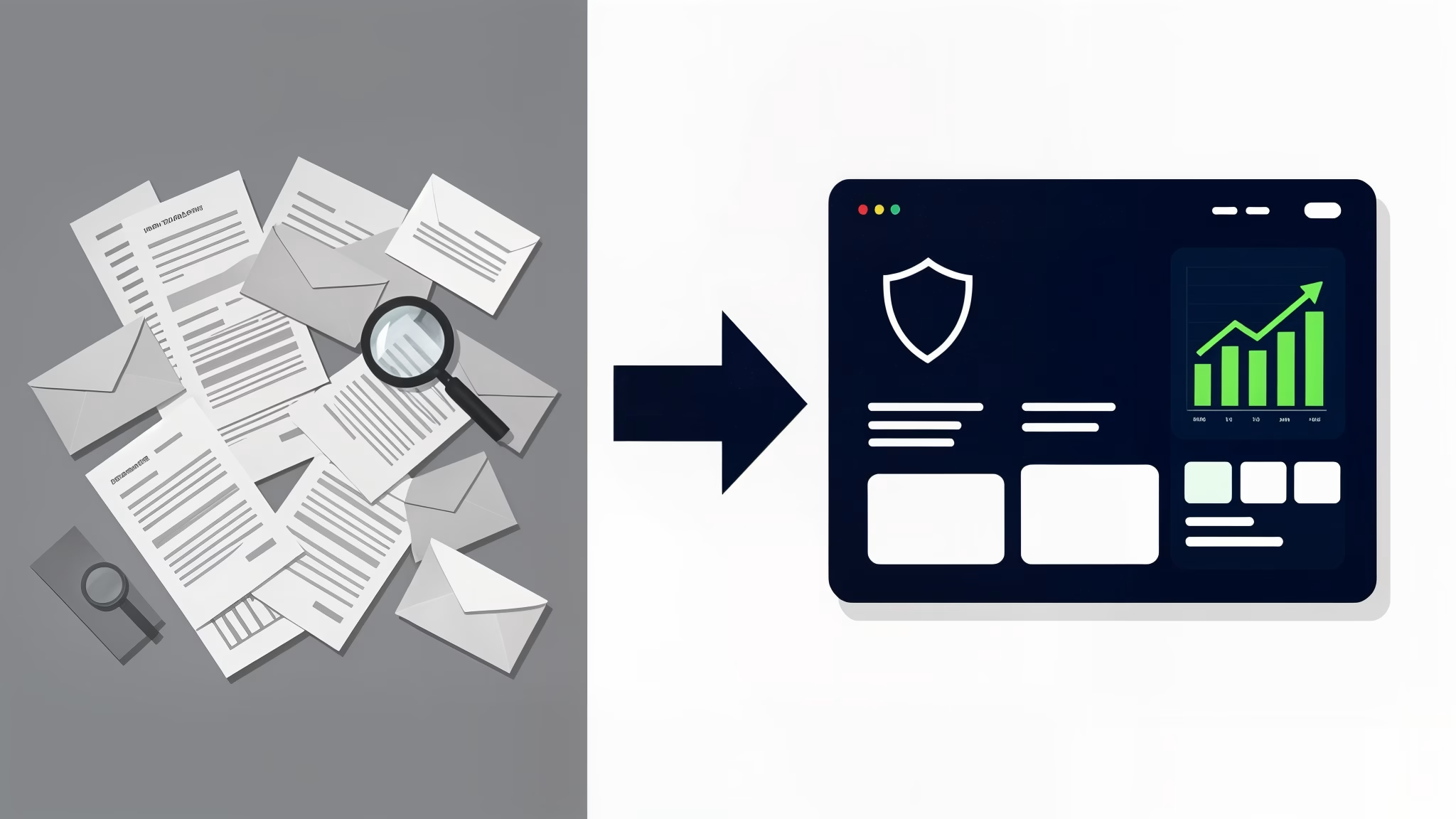
Board elections in Bay County associations routinely break down over proxy disputes. Paper proxies arrive undated, unsigned, or missing the meeting identification required by Florida law. Owners hand them to neighbors who forget to submit them. Quorum falls short because nobody knows how many proxies are actually valid until the meeting starts. When the count is close, the losing side challenges the result, and the association spends thousands on arbitration.
The problem is not that boards lack good intentions. The problem is that paper-based proxy collection is structurally fragile. It depends on physical delivery, manual counting, and trust that the proxy holder will actually vote as instructed. For Bay County condominium and HOA boards managing coastal communities from Panama City Beach to Lynn Haven, the stakes are higher than convenience. A botched election can invalidate board decisions, expose directors to fiduciary claims, and erode owner confidence in the association’s governance.
What Makes Proxy Voting So Risky for Bay County Boards
Proxy voting lets an owner who cannot attend a meeting assign their voting power to someone else. Under Florida Statute 720.306(8)(a), a valid HOA proxy must be dated, state the date, time, and place of the meeting, and be signed by the owner who executed it. The proxy is revocable at any time and automatically expires 90 days after the meeting for which it was originally given. Under Florida Statute 718.112(2)(b), condominium elections follow even stricter rules, including secret ballot requirements and two-envelope systems.
Here is what goes wrong in practice:
- Undated or unsigned proxies: A proxy missing any required statutory element is invalid. There is no substantial-compliance carve-out under Section 720.306(8)(a). Counting an invalid proxy toward quorum inflates participation illegally.
- Revocation disputes: An owner revokes a proxy verbally but the paper copy is still in the proxy holder’s hand. The association has no way to verify which instruction is current.
- Expired proxies: A proxy from a prior meeting gets reused because nobody checked the 90-day expiration window.
- Lost or duplicated proxies: Paper forms get lost in transit, mailed to the wrong address, or submitted twice by well-meaning owners.
- Quorum failures: The board cannot conduct business because nobody knows the valid proxy count until the meeting is called to order, and by then it is too late to chase more.
Each of these failures creates a dispute pathway. Under both FS 720 and FS 718, an election dispute between a member and an association must be submitted to binding arbitration with the Division of Florida Condominiums, Timeshares, and Mobile Homes or filed with a court. Arbitration costs the association time and money even when the board wins.

Why Bay County Associations Need a Digital Proxy System Now
Bay County’s coastal communities face a governance squeeze. Panama City Beach condominiums operate under FS 718 with strict election procedures and mandatory secret ballots. HOA communities across unincorporated Bay County and its municipalities operate under FS 720 with separate but equally demanding proxy rules. Boards that try to manage both regimes with paper forms, clipboards, and a volunteer election committee are accepting risk that a modern system eliminates.
The fiduciary stakes are real. A director who certifies an election based on invalid proxies may face a claim of breach of fiduciary duty. Florida law imposes a standard of care on board members under both FS 718 and FS 720, and the expectation is that directors act with the diligence of a reasonably prudent person. Allowing a structurally fragile paper process to determine who sits on the board is difficult to defend when a digital alternative exists.
How a Tech-Driven Proxy System Works
A digital proxy system does not replace the board’s authority or the manager’s professional judgment. It replaces the paper pipeline with a verifiable digital one. Here is how the workflow functions for a Bay County association:
1. Owner Identity Verification
When an owner submits a proxy digitally, the system verifies their identity against the association’s owner records before accepting the form. This prevents the most common fraud vector: someone submitting a proxy on behalf of an owner who never authorized it.
2. Statutory Compliance Check
The system validates each proxy against the statutory requirements automatically. For HOAs, it confirms the date, meeting identification, and signature field are present per FS 720.306(8)(a). For condominiums, it checks the additional secret ballot and envelope requirements under FS 718.112(2)(b). A proxy that fails the check is flagged before the meeting, not during it.
3. Real-Time Quorum Dashboard
The board and manager see a live count of valid proxies and in-person attendees against the quorum threshold. If the count is short, the system can trigger automated reminders to owners who have not yet submitted a proxy, giving the board days instead of minutes to close the gap.
4. Revocation Management
Because every proxy submission is timestamped and recorded in a single system, revocation becomes unambiguous. An owner who revokes a proxy does so through the same digital channel, and the system updates the count immediately. There is no paper copy lingering in someone’s folder that creates a conflict about which instruction governs.

FS 720 vs FS 718 Proxy and Election Rules
Bay County boards that govern both HOA and condominium communities need to understand where the two statutes diverge. The table below summarizes the key differences boards must account for when modernizing proxy voting.
| Requirement | FS 720 (HOA) | FS 718 (Condominium) |
|---|---|---|
| Proxy validity | Dated, meeting info, signed; 90-day expiration (720.306(8)(a)) | Limited general proxies; specific requirements vary by election type (718.112(2)(b)) |
| Secret ballot | Permitted if governing documents allow; not mandated by statute | Required for elections; two-envelope system mandated |
| Quorum default | 30% of voting interests unless governing docs differ | Majority of voting interests unless reduced per statute |
| Revocation | Revocable at any time by the owner | Revocable at any time by the owner |
| Dispute resolution | Binding arbitration with Division or court action | Binding arbitration with Division or court action |
Traditional Management vs Maxet’s Tech-Driven Management
The difference between a traditional management approach and Maxet’s tech-driven model is most visible during election season. Here is how the two compare when it comes to proxy voting specifically:
| Dimension | Traditional Management | Maxet’s Tech-Driven Management |
|---|---|---|
| Proxy collection | Paper forms mailed, hand-delivered, or emailed as PDFs | Digital submission with identity verification and timestamp |
| Compliance check | Manual review by manager or election committee night-of | Automated statutory validation before the meeting |
| Quorum tracking | Counted manually at the door; no advance visibility | Real-time dashboard with automated owner reminders |
| Revocation handling | Paper copy vs verbal revocation; no clear record | Digital revocation recorded in same system, instant update |
| Audit trail | Folder of paper proxies, if they survive | Complete digital record with timestamps and verification status |
| Dispute risk | High; invalid proxies discovered too late to fix | Low; invalid proxies flagged and corrected before the meeting |
For Bay County boards, the operational benefit is straightforward. The technology handles the data synthesis, validation, and tracking, while the manager provides the professional judgment and operational execution. The system does not decide who wins the election. It ensures the election was conducted on valid votes so the result holds up if challenged.
What Bay County Boards Should Demand From a Proxy Voting System
Board members evaluating a management firm or a technology upgrade should ask these questions before committing:
- Identity verification: Does the system confirm that the person submitting the proxy is the actual owner of record?
- Statutory alignment: Does it validate proxies against both FS 720.306(8) and FS 718.112(2)(b) depending on the association type?
- Revocation clarity: Can an owner revoke a proxy through the same channel, with the system recording the change instantly?
- Quorum visibility: Can the board see the valid proxy count before the meeting, not just at the door?
- Audit trail: Does the system produce a timestamped record of every submission, revocation, and validation step that can be produced if a dispute goes to arbitration?
- Human-in-the-loop: Does the system leave fiduciary and procedural decisions to the manager and board, or does it attempt to automate judgment that requires human review?
Boards in Panama City Beach and across Bay County should treat proxy voting modernization as a governance standard, not a convenience feature. The cost of a disputed election, in legal fees and lost owner trust, exceeds the cost of the system many times over.
Frequently Asked Questions
Can a Bay County HOA ban proxy voting entirely?
No. Under Florida Statute 720.306(8), members have the right to vote in person or by proxy unless the governing documents specifically restrict it. A board cannot unilaterally eliminate proxy voting. The governing documents would need to be amended through the proper membership vote, and even then the statutory right remains the default. Digital proxy systems do not remove the right; they make it easier to exercise correctly.
Does a digital proxy count as a signed proxy under Florida law?
Florida statutes require a proxy to be signed by the authorized person who executed it. Digital signatures and electronic execution are generally accepted under Florida law, including the Florida Electronic Signature Act, when the system can verify the signer’s identity and intent. Boards should confirm their governing documents do not require a wet-ink signature specifically. If they do, the governing documents should be amended to permit electronic execution.
What happens if an owner submits a digital proxy and then mails a paper one too?
A well-designed digital system handles this through timestamping. The most recent valid proxy governs, and the system records which submission came first. If the paper proxy arrives after the digital one, the digital proxy stands unless the owner revokes it through the same system. This is far cleaner than the paper-only scenario, where two proxy holders may each believe they hold the valid proxy.
How does digital proxy voting help with condominium secret ballot requirements?
For Bay County condominiums under FS 718, the system can separate the identity verification step from the ballot itself, preserving the anonymity that the two-envelope system is designed to protect. The owner’s identity is verified for eligibility, but the vote is recorded without linking it back to the owner. This mirrors the statutory intent while eliminating the physical envelope handling that introduces errors and disputes.
Take the Next Step for Your Bay County Association
If your Bay County board is preparing for an election and dreading the proxy count, the fix is not more paper and more volunteers. It is a system that verifies every proxy before the meeting, tracks quorum in real time, and produces a record that holds up under arbitration. Maxet builds this workflow into every association transition we manage, pairing the technology with a manager who provides the professional judgment and operational execution Florida statutes require.
Contact Maxet to schedule a proxy voting review for your Bay County or Walton County association. We will assess your current election process, identify the compliance gaps, and show you how a tech-driven approach reduces dispute risk while keeping the board in control of every decision.
Legal disclaimer: Maxet is a professional community association management firm providing business operational efficiency and administrative support. We are not a law firm, and the information provided in this article does not constitute legal advice or create an attorney-client relationship. For specific legal interpretation of Florida Statutes or governing documents, we strongly recommend consulting with a licensed attorney specializing in Florida community association law.