
Short answer: Pet waste station procurement is a board-level vendor decision that affects common-area sanitation, owner satisfaction, and liability exposure. Bay County HOA boards should specify station hardware standards, define service-level requirements in the sanitation contract, and track vendor performance against measurable outcomes rather than accepting a default package from a management company.
Why Pet Waste Management Is a Board Responsibility, Not a Vendor Detail
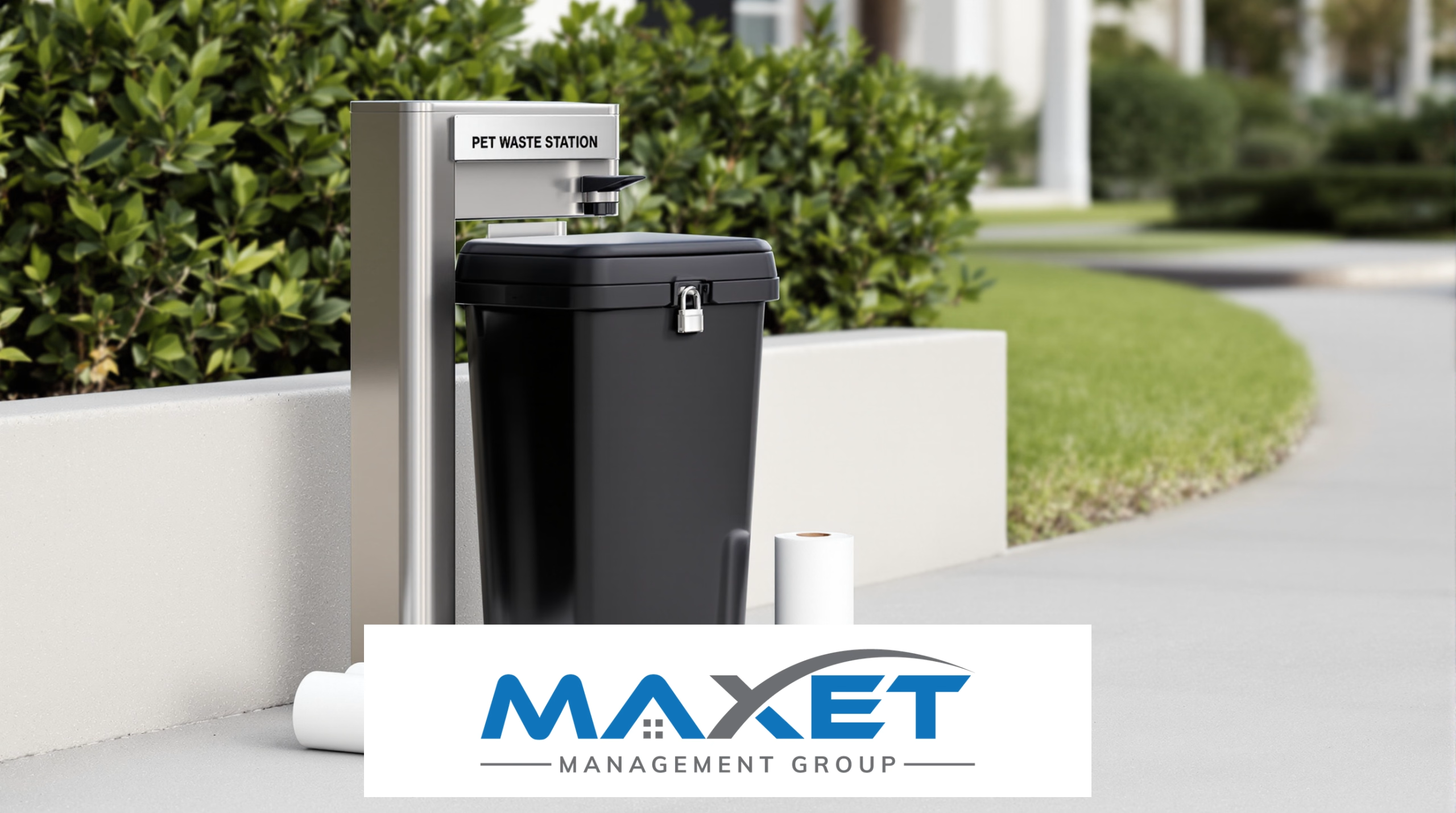
Pet waste stations look like a minor amenity, but they sit at the intersection of three board duties: common-area maintenance, vendor oversight, and health and sanitation. In Bay County communities, where coastal humidity accelerates odor and bacteria buildup, neglected stations become a resident complaint driver and a potential vector for environmental runoff into storm drains.
A board that treats pet waste stations as a line item buried inside a landscaping contract loses visibility into service frequency, bag inventory, and waste disposal compliance. The board’s fiduciary duty under Florida Statute 720.303(1) requires that association funds be spent in furtherance of the association’s purposes, which includes maintaining common areas in a habitable and sanitary condition. When stations go empty for weeks, the board has a documented maintenance gap that no vendor excuse can cover.
What a Pet Waste Station Procurement Specification Should Include
Boards should demand a written procurement specification before signing any sanitation contract. The specification answers four questions that a generic vendor proposal will not address on its own:
1. Hardware Standards
Stations should be commercial-grade stainless steel or powder-coated steel with UV-resistant bag dispensers. Bay County’s salt air corrodes cheaper aluminum and plastic units within two to three years. The specification should name the material, the mounting method (in-ground vs surface mount), and the expected replacement cycle. A board that accepts the vendor’s default hardware will likely replace stations every 18 months instead of every five years.
2. Service Frequency and Scope
The contract must state how often each station is serviced, what “serviced” means (bag restock, waste bag removal, station wipe-down, odor treatment), and the maximum allowable gap between visits. A contract that says “weekly service” without defining the scope gives the vendor room to restock bags but skip waste removal, leaving the board with overflowing bins and resident complaints.
3. Waste Disposal Compliance
Pet waste is solid waste. In Bay County, disposal must comply with local solid waste ordinances, not simply be dropped into the nearest dumpster. The contract should specify that the vendor transports waste to an approved disposal site and provides a disposal manifest on request. Boards that skip this clause may find their community cited for improper waste handling during a county inspection.
4. Cost Allocation and Reserve Treatment
Pet waste station replacement is a reserve-eligible component if the stations are permanent common-area fixtures. The reserve study should list station replacement at the end of the hardware cycle, and the operating budget should cover consumables (bags, odor treatment) and the sanitation service contract. Boards that lump everything into one operating line item lose the ability to track whether the service contract is inflating while the hardware depreciates silently.
Traditional Management vs. Maxet’s Tech-Driven Sanitation Oversight
The gap between a traditional management company and a tech-driven approach shows up most clearly in vendor accountability. Here is how the two models compare when overseeing a pet waste sanitation contract:
- Traditional management: The vendor invoices monthly, the manager approves the invoice based on a log the vendor itself produces, and the board sees a line item in the financial report with no service evidence. Complaints arrive, the manager emails the vendor, and the cycle repeats.
- Maxet’s tech-driven oversight: Each service visit is logged with a timestamp and photo evidence. Bag inventory and waste volume are tracked against the contract’s service-level definition. The board sees a vendor performance report that flags missed visits, partial service, or cost creep before they become resident complaints. The technology handles the data synthesis, while the manager provides the professional judgment and operational execution.
A Procurement Roadmap for Bay County Boards
If your current sanitation contract is buried inside a landscaping agreement or lacks a written specification, the following sequence restores board control:
- Audit the current state. Count the stations, photograph their condition, and document the current service frequency. This baseline becomes the specification’s starting point.
- Draft a procurement specification. Use the four sections above (hardware, service scope, disposal compliance, cost allocation). Require vendors to bid against the specification, not against each other’s default packages.
- Require service-level evidence in the contract. The contract should mandate per-visit logs with photos, not just a vendor self-reported summary. This is the clause that makes vendor accountability enforceable.
- Set a quarterly vendor performance review. Compare actual visits against contracted frequency, track resident complaints against station locations, and flag any station with recurring service gaps for relocation or additional servicing.
- Align the reserve study. If station replacement is not already a line item in the reserve study, request that the reserve specialist add it with the hardware cycle documented in the procurement specification.
Common Pitfalls in Pet Waste Station Contracts
Boards in Bay County communities frequently encounter the following issues when they inherit a sanitation contract from a prior management company:
- Auto-renewal clauses that lock the community into a vendor for 12 months with a narrow cancellation window, usually 60 to 90 days before renewal.
- Cost-per-station pricing without service-level definition, which lets the vendor raise the per-station rate while reducing visit frequency.
- No disposal manifest requirement, leaving the board unable to prove compliance during a county solid waste inspection.
- Hardware ownership ambiguity — if the vendor owns the stations, the board cannot switch vendors without losing the hardware. The specification should state that stations are association property.
Frequently Asked Questions
How often should pet waste stations be serviced in a Bay County HOA?
Service frequency depends on community size and pet ownership density. A reasonable starting point is twice-weekly service during peak season (May through September) and weekly service during the rest of the year. The contract should allow the board to adjust frequency based on tracked usage data, not lock the community into a single year-round rate.
Can a Bay County HOA board require photo evidence of each service visit?
Yes. A sanitation contract is a private vendor agreement, and the board can require any reasonable documentation as a condition of payment. Photo evidence with timestamps is now standard practice in professional community association management and is enforceable as a contract term.
Should pet waste station replacement be in the reserve study?
If the stations are permanent common-area fixtures mounted in-ground or to common-area structures, replacement belongs in the reserve study. Consumable items (bags, odor treatment) and the recurring service contract belong in the operating budget. A reserve specialist can confirm the classification based on the station mounting method and expected useful life.
What happens if a Bay County HOA’s sanitation vendor fails an inspection?
The board should document the failure, issue a written cure notice referencing the contract’s service-level definition, and require corrective action within a specified period. If the vendor cannot cure, the contract’s termination clause governs. Boards should never let a sanitation failure persist unaddressed, because it creates a documented maintenance gap that affects fiduciary compliance.
What Boards Should Demand Next
Pet waste station procurement is a small contract with outsized visibility. Residents notice empty stations before they notice reserve fund ratios. A board that manages this contract with written specifications, service-level evidence, and quarterly performance reviews demonstrates the same oversight discipline that should govern every vendor relationship in the community.
If your current management company cannot produce per-visit service evidence or a vendor performance report for your sanitation contract, that gap is a symptom of a broader oversight problem. Learn how Maxet applies tech-driven vendor oversight to Bay County associations.
Legal disclaimer: Maxet is a professional community association management firm providing business operational efficiency and administrative support. We are not a law firm, and the information provided in this article does not constitute legal advice or create an attorney-client relationship. For specific legal interpretation of Florida Statutes or governing documents, we strongly recommend consulting with a licensed attorney specializing in Florida community association law.