

Short answer: A homeowner’s solar installation is generally an individual property request—not an HOA-wide energy program or a benefit that automatically flows to the association. In a Bay County HOA, the board and architectural review committee should apply the association’s documented review process, confirm the application is complete, and obtain association-counsel guidance where the governing documents or Florida law require interpretation. Florida Statute 163.04 protects qualifying solar installations from outright or effectively prohibitive restrictions, while allowing a reviewing entity to determine roof location within the statute’s stated parameters when effective operation is not impaired.
Start With the Right Question
When an owner proposes rooftop solar, the association’s role is not to market group purchasing, promise utility savings to the community, or turn an owner improvement into an association capital project. The practical question is narrower: does the owner’s application satisfy the association’s architectural process, the governing documents, applicable permits and insurance requirements, and the limits imposed by Florida law?
That distinction protects everyone. The owner receives a documented response to an individual request. The board preserves a consistent architectural-review record. And the association avoids representing that one owner’s investment reduces assessments, creates shared revenue, or serves the common budget.

Florida’s Solar Protection Does Not Eliminate a Review Process
Florida Statute 163.04 says a deed restriction, covenant, declaration, or similar binding agreement may not prohibit—or have the effect of prohibiting—solar collectors on buildings on covered lots or parcels. It also states that an owner may not be denied permission by an entity with alteration-control authority over residential dwellings or condominium units.
At the same time, the statute permits the reviewing entity to determine the specific roof location for solar collectors within an orientation to the south, or within 45 degrees east or west of due south, if that determination does not impair the collectors’ effective operation. That is why an association should not rely on a generic “solar prohibited” rule or an aesthetic preference alone. It should use a consistent, documented review process and obtain association-attorney advice for a disputed or unusual request.
This article is operational guidance, not a substitute for the declaration, published architectural standards, a site-specific engineering review, permitting requirements, or legal advice.
A Board-Ready Solar Application Checklist
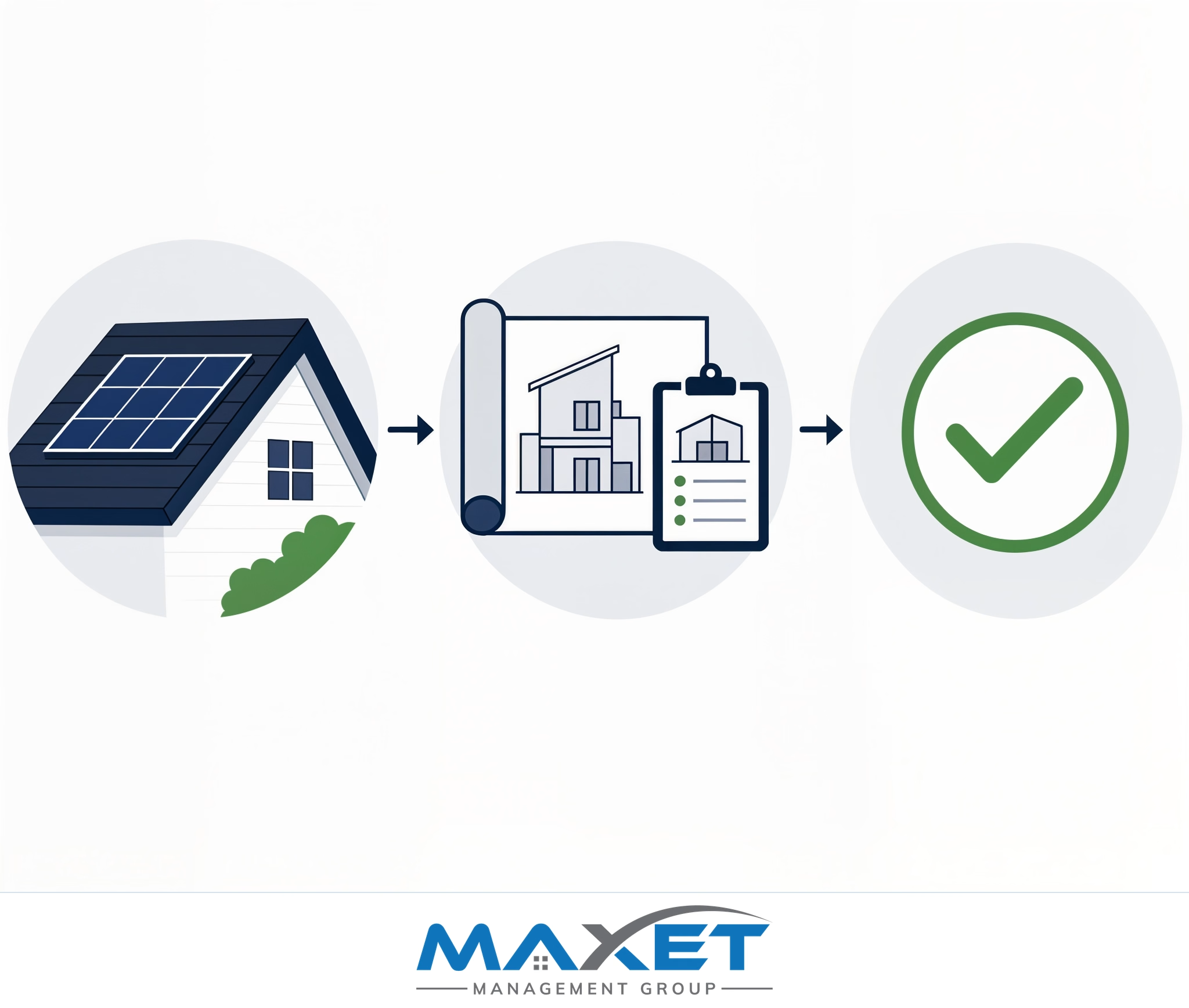
A complete application lets the architectural review committee evaluate the actual proposal rather than assumptions. The association’s written standards and governing documents should control the exact requirements, but a practical file commonly includes:
- A completed architectural-review application identifying the lot and owner.
- A roof or site plan showing the proposed panel locations, array dimensions, equipment locations, and visible conduit routes.
- Product information and contractor scope sufficient to understand the exterior change.
- Proof that the contractor is appropriately licensed and insured for the work, as required by the association’s standards and applicable law.
- Permit and utility-interconnection information when available, with the understanding that governmental and utility approvals are separate from architectural approval.
- Written acknowledgment of the owner’s ongoing responsibility for installation, repair, removal, roof coordination, and damage caused by the owner’s contractor or equipment, subject to the governing documents and applicable law.

How the Architectural Review Should Work
1. Confirm what the documents actually require
Start with the declaration, bylaws, architectural standards, recorded rules, and any published application form. Identify who has authority to review the request, the response deadline, and whether the standards address roof-mounted equipment, visibility, conduit, screening, roof penetrations, or exterior modifications.
2. Use the same process for comparable requests
Consistency matters. The committee should document the materials reviewed, the standards applied, questions asked, and the decision. A written record helps the board apply its standards even-handedly and avoids creating a vague, ad hoc practice.
3. Separate architectural approval from outside approvals
An architectural approval is not a building permit, utility interconnection approval, structural certification, electrical inspection, insurance determination, or warranty approval. The owner and contractor remain responsible for obtaining the approvals and professional advice required for the installation.
4. Give a written, specific response
If additional information is needed, identify it. If placement options are being evaluated, state the documented basis and avoid unsupported conclusions about system performance. If the request presents a conflict between a published standard and Florida solar protections, pause for association-counsel review rather than issuing a conclusory denial.
What the Association Should Not Promise
The association should not represent that an individual owner’s solar system will lower association assessments, produce common-area savings, qualify the association for tax incentives, or create a community-wide energy benefit. Those outcomes depend on the ownership structure, the meters served, the utility arrangement, financing, tax treatment, governing documents, and other facts outside a standard architectural request.
A separately proposed common-area solar project is a different matter. It may involve association authority, material-alteration provisions, reserve or budget funding, engineering, utility feasibility, insurance, procurement, owner-consent thresholds, and legal review. It should be evaluated as its own association capital decision—not assumed from an owner’s rooftop-solar application.
Operations After Approval
Approval should be followed by a clean administrative record: the approved plan, conditions of approval, contractor information, any permits or inspections the association requires the owner to provide, and closeout documentation. When a roof replacement, exterior repair, or casualty event arises later, that record helps the owner, manager, board, and contractor identify responsibilities promptly.
For coastal communities, the board should also make sure the association’s process directs owners to use qualified professionals and follow applicable building-code, wind-load, roof-warranty, and insurance requirements. The association is not certifying the system; it is maintaining a disciplined record for an exterior alteration.
A Practical Decision Framework for Boards
Use a simple sequence: receive a complete request, identify the applicable documents, review the proposed placement and exterior details, confirm what further professional or governmental approvals remain the owner’s responsibility, document the decision, and involve association counsel when the documents and statutory protections require interpretation.
This is a governance and architectural-control process—not a group-solar sales program. Keeping the scope clear allows boards to respect owners’ rights, apply community standards consistently, and avoid creating financial expectations the association cannot substantiate.
Next Step
Before acting on a solar request, boards should assemble the owner’s application, the governing-document provisions, the current architectural standards, and any relevant prior approvals for association-counsel review when interpretation is needed. Maxet can help organize the request file, maintain the review record, and support a consistent administrative process; the board and its attorney retain responsibility for legal interpretation and final authority under the governing documents.
Legal disclaimer: Maxet is a professional community association management firm providing operational and administrative support. This article is not legal advice and does not create an attorney-client relationship. Association boards and owners should consult qualified Florida counsel for interpretation of their governing documents and Florida law.