
Short answer: Bay County HOA boards can reduce hurricane shutter and impact window costs by 15-30% through bulk procurement contracts, multi-year service agreements, and coordinated vendor benchmarking across associations. The key is negotiating before storm season, bundling installation with maintenance, and using technology to track warranty compliance and contractor performance across the lifecycle of the investment.
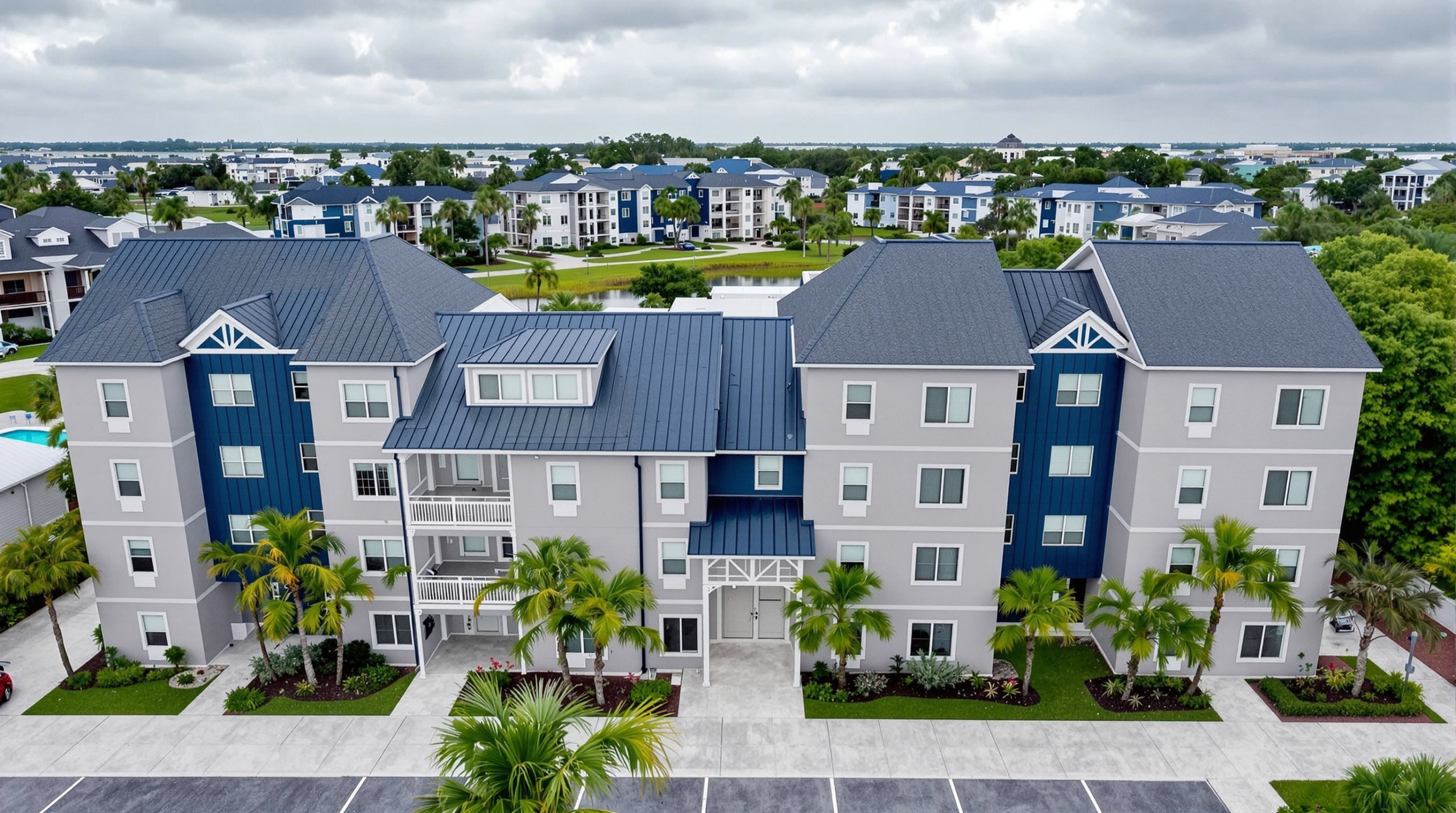
For Bay County community associations, hurricane protection is not a discretionary expense — it is a fiduciary obligation. Florida’s hurricane season runs from June through November, and Panama City Beach communities sit directly in the path of Gulf-born storms. The question for boards is not whether to invest in shutters and impact glazing, but whether the association is getting the best possible value for the capital deployed.
Why Hurricane Shutter and Impact Window Contracts Matter for Bay County Boards
Wind-borne debris protection is a line item that appears in nearly every Bay County HOA reserve study. Yet many associations approach it transactionally — calling a vendor after a storm, paying emergency rates, and starting from scratch each season. This reactive pattern wastes board capital and leaves gaps in warranty coverage, maintenance records, and contractor accountability.
A structured procurement strategy transforms hurricane protection from a recurring crisis into a managed asset class. By negotiating multi-year contracts with certified Florida contractors, boards lock in pricing, secure priority service during storm activations, and build a documented maintenance history that strengthens insurance negotiations.

What Bay County Boards Should Demand in a Hurricane Protection Contract
1. Pre-Storm Deployment Terms
The contract should specify response times for storm activation — typically 48-72 hours before projected landfall. Boards should verify that the contractor maintains sufficient staffing and equipment inventory to service all contracted communities simultaneously. Without this guarantee, a vendor may prioritize larger clients and leave smaller associations exposed.
2. Impact Window Specifications and Florida Building Code Compliance
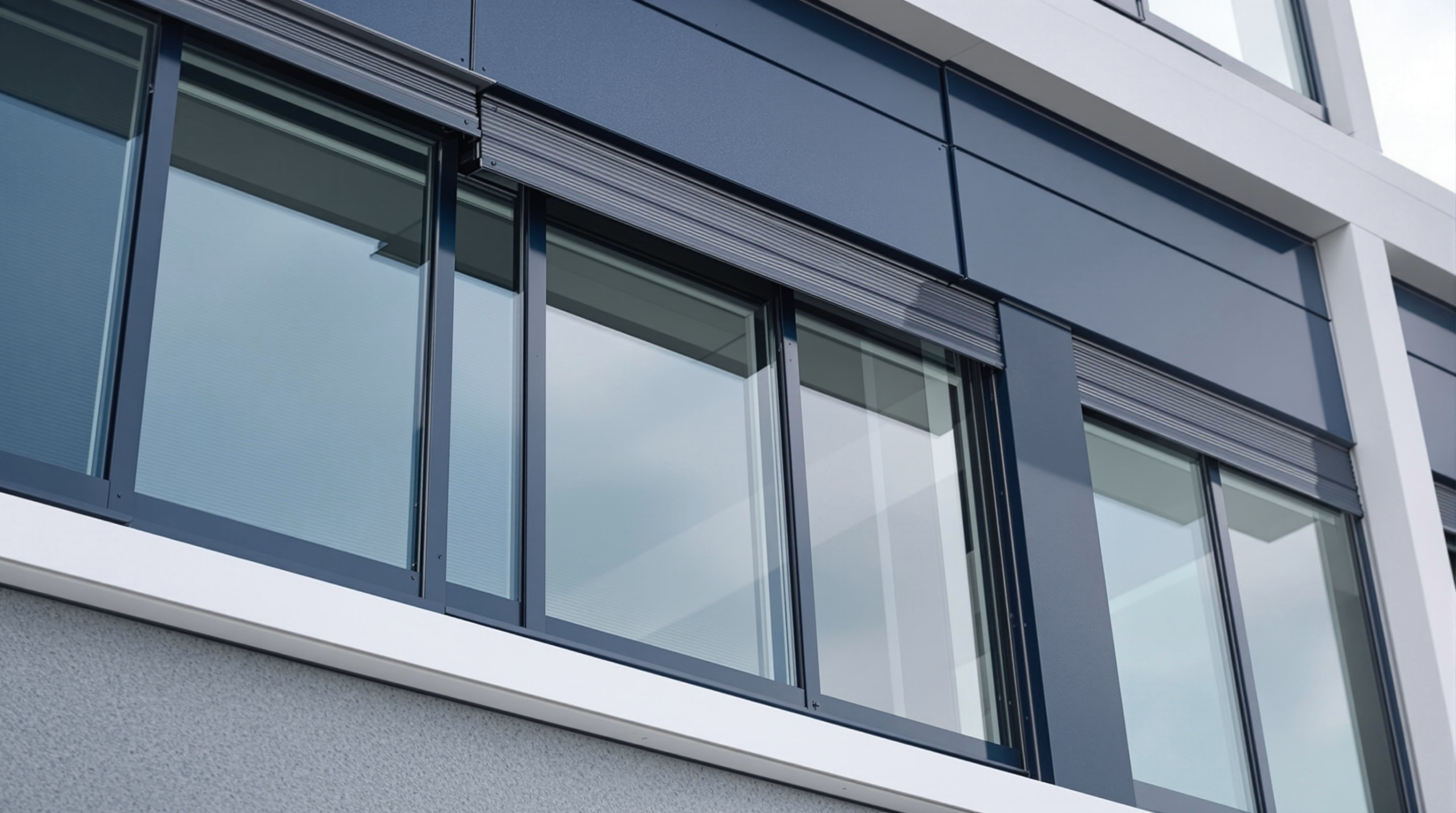
All impact glazing must meet Florida Building Code (FBC) standards for High-Velocity Hurricane Zones (HVHZ) or Missile Impact Level D, depending on the building’s location and height. Bay County’s proximity to the Gulf means most associations fall within Wind Zone 2 or 3. Boards should require documentation of FBC product approvals (notice numbers) for every installed unit, and these records should be stored in a digital repository accessible to future boards.
3. Warranty Transfer and Maintenance Logging
Hurricane shutter warranties often span 10-15 years, but they are only valid if maintenance is performed to manufacturer specifications. The contract must include annual maintenance inspections, and the results must be logged digitally. When a board transitions to a new management company or contractor, these records transfer with the association — not the vendor.
The Cost of Reactive vs. Proactive Hurricane Protection Procurement
Bay County associations that purchase hurricane protection reactively — calling vendors after a storm warning is issued — consistently pay 25-40% more than those with pre-negotiated contracts. Emergency deployment fees, surge pricing on materials, and contractor scarcity during active storm threats drive costs upward. A proactive procurement strategy eliminates these premiums.
Traditional Management vs. Maxet’s Tech-Driven Management
| Aspect | Traditional Management | Maxet’s Tech-Driven Management |
|---|---|---|
| Procurement Timing | Reactive — after storm warning | Strategic — negotiated pre-season with multi-year terms |
| Pricing | Emergency rates, 25-40% premium | Locked-in contract pricing, bulk association discounts |
| Warranty Tracking | Paper files, lost during transitions | Digital repository with automated expiration alerts |
| Contractor Vetting | Word-of-mouth, no benchmarks | Digital vendor scoring with performance history |
| Deployment Priority | First-come, first-served | Contractual priority service guarantee |
| Maintenance Records | Ad hoc, vendor-controlled | Association-owned digital logs, transferable |
FS 720 vs FS 718: Hurricane Protection Authority for Bay County Associations
The authority to procure and maintain hurricane protection for common areas differs between homeowners’ associations (FS 720) and condominium associations (FS 718). Bay County boards must understand which statutory framework governs their procurement process.
| Aspect | FS 720 (HOA) | FS 718 (Condo) |
|---|---|---|
| Maintenance Authority | Board may contract for common-area maintenance under FS 720.303(1) | Association maintains common elements under FS 718.211(1)(c) |
| Reserve Funding | Reserves optional unless governing docs require (FS 720.303(6)(f)) | Reserves mandatory; structural components including hurricane protection must be funded (FS 718.112(2)(f)) |
| Bid Requirements | Governing documents typically specify; statute does not mandate competitive bidding | FS 718.3026 requires competitive bidding for contracts exceeding statutory thresholds |
| Board Approval | Board may approve contracts within budgetary authority | Board approval required; contracts over $500K may require unit owner vote per governing docs |
| Insurance Coordination | FS 720.3033 requires board to use best efforts to obtain insurance | FS 718.111(11)(a) mandates property insurance on common elements |
How Technology Improves Hurricane Protection Contract Management
The technology handles the data synthesis, while the manager provides the professional judgment and operational execution. For hurricane protection contracts, this means using digital tools to track warranty expiration dates, automate maintenance reminders, benchmark vendor pricing across multiple Bay County associations, and maintain a centralized repository of FBC compliance documentation.
Digital Vendor Performance Scoring
Boards should require their management company to maintain a digital vendor scorecard for every hurricane protection contractor. The scorecard tracks response times during storm activations, warranty claim resolution speed, maintenance inspection completion rates, and pricing competitiveness against Bay County market benchmarks. This data gives boards objective evidence when deciding whether to renew or replace a contractor.
Automated Reserve Fund Tracking
Hurricane shutter and impact window replacement cycles are predictable — typically 15-20 years for shutters and 20-25 years for impact glazing. A digital reserve tracking system projects replacement dates, calculates annual funding requirements, and flags shortfalls before they become special assessments. For Bay County condominium associations subject to SIRS requirements under SB 154, this tracking is not optional — it is statutory compliance.
Centralized Compliance Documentation
Every FBC product approval, manufacturer warranty, maintenance log, and inspection report should reside in a digital repository owned by the association — not the contractor or management company. When boards transition between managers, this documentation transfers seamlessly, preventing the costly re-invention that occurs when records are lost or held hostage by outgoing vendors.
A Procurement Roadmap for Bay County Boards
Step 1: Audit Current Contracts and Assets (January-February)
Before hurricane season, inventory all existing hurricane shutters, impact windows, and active service contracts. Document the age, warranty status, and FBC compliance of each unit. Identify contracts expiring within 12 months and flag them for renegotiation.
Step 2: Benchmark Pricing Across Bay County (March-April)
Collect pricing data from at least three Florida-licensed hurricane protection contractors serving Bay County. Compare per-unit installation costs, annual maintenance fees, and storm deployment rates. Use this benchmark data to negotiate from a position of evidence rather than vendor assertions.
Step 3: Negotiate Multi-Year Contracts (April-May)
Secure a 3-5 year contract with pricing locks, priority deployment guarantees, and digital maintenance logging requirements. The contract should include performance penalties for missed deployment windows and a termination clause for consistent underperformance documented via the vendor scorecard.
Step 4: Implement Digital Tracking (Before June 1)
Load all contract terms, warranty data, and maintenance schedules into the association’s digital management platform. Configure automated alerts for warranty expirations, maintenance due dates, and contract renewal windows. Verify that the system is accessible to all board members, not just the management company.
Frequently Asked Questions
Can a Bay County HOA board require unit owners to install hurricane shutters?
The authority depends on the association’s governing documents. Many Bay County HOA declarations include architectural standards that require hurricane protection for ground-floor or windward-facing units. Boards should consult their declarations and Florida Statute 720.3035 regarding parcel use restrictions before mandating owner-installed shutters. For common-area shutters, the board has procurement authority under its general maintenance powers.
How often should hurricane shutters be inspected in Bay County?
Hurricane shutters should be inspected annually, ideally before June 1. The inspection should verify mechanical operation, corrosion or wear on moving parts, mounting hardware integrity, and fabric or panel condition for accordion and roll-down styles. Impact windows require visual inspection for seal failure, glass crazing, and frame integrity. All inspections must be documented and stored in the association’s digital repository.
What should a Bay County board do if a hurricane protection contractor fails to deploy during a storm?
If a contractor fails to meet contractual deployment obligations, the board should document the failure (timestamps, attempted contacts, weather warnings), invoke any performance penalties in the contract, and file the documentation for potential termination. Boards should also have a backup contractor identified before hurricane season — a secondary vendor with smaller capacity who can be activated if the primary contractor defaults.
Are hurricane shutters and impact windows part of the reserve study for Bay County condos?
Yes. Under SB 154 and FS 718 requirements for structural integrity reserve studies (SIRS), hurricane protection systems that are part of the common elements or limited common elements must be included in the reserve study. The reserve study should project replacement costs, remaining useful life, and annual funding requirements. For Bay County condominiums, this is not just best practice — it is statutory compliance.
The Bottom Line for Bay County Boards
Hurricane protection procurement is one of the largest discretionary capital investments a Bay County HOA board will make. Treating it as a strategic, technology-managed asset class — rather than an annual emergency — protects both the community’s physical infrastructure and the board’s fiduciary standing. The boards that negotiate proactively, track digitally, and benchmark objectively will consistently outperform those that rely on legacy, reactive management models.
Maxet’s approach combines professional community association management with technology-driven oversight, giving Bay County boards the tools to manage hurricane protection contracts with the same rigor applied to reserve funding, insurance, and financial reporting. The technology handles the data synthesis, while the manager provides the professional judgment and operational execution.
Legal disclaimer: Maxet is a professional community association management firm providing business operational efficiency and administrative support. We are not a law firm, and the information provided in this article does not constitute legal advice or create an attorney-client relationship. For specific legal interpretation of Florida Statutes or governing documents, we strongly recommend consulting with a licensed attorney specializing in Florida community association law.