
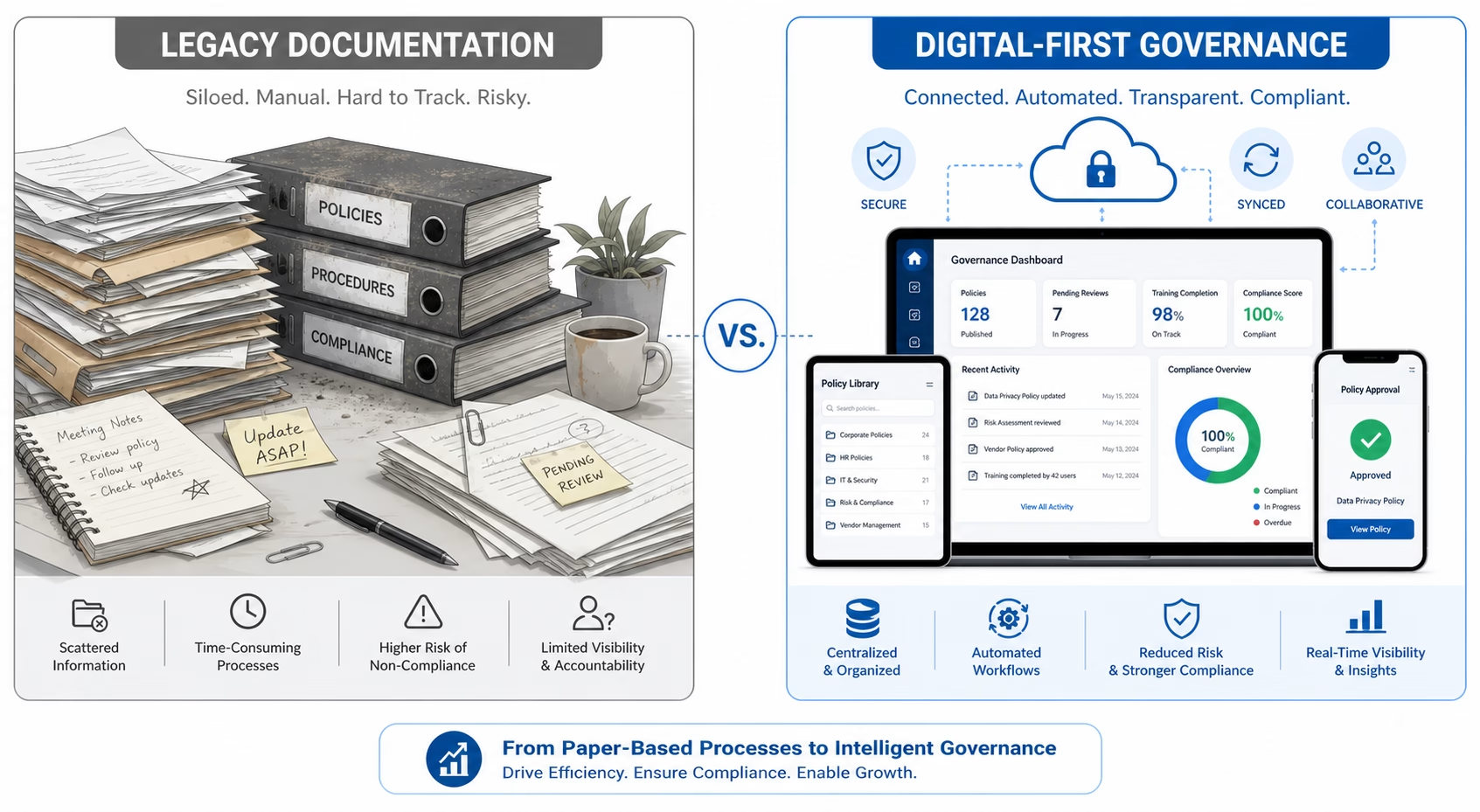
Short answer: Modernizing board meeting minutes involves transitioning from narrative summaries to action-oriented, decision-focused records. By implementing digital-first governance and a standardized template, Bay County associations can ensure audit compliance, reduce liability, and provide clear evidence of fiduciary duty.

Why Traditional Minutes Fail Audit Scrutiny
Many associations in Northwest Florida still rely on “conversational” minutes—records that capture who said what rather than what was decided. In an audit or legal challenge, these narratives create ambiguity and potential liability. For board members in Bay County, the goal is to demonstrate that a quorum was present, a motion was made, seconded, and voted upon, and that the board acted within its authority.
The Maxet Approach: Action-Oriented Governance
Maxet replaces the ‘storytelling’ approach to minutes with a technical, high-efficiency framework. We focus on the outcome, not the debate. This reduces the risk of misinterpretation and ensures that every board action is traceable and compliant with Florida statutes.
Key Elements of Compliant Minutes
- Precise Timestamps: Exact start and adjournment times.
- Quorum Verification: Explicit confirmation of attending members.
- Motion Clarity: Exact wording of the motion and the result of the vote.
- Action Item Tracking: Clear assignment of responsibility and deadlines for approved tasks.
Traditional Management vs. Maxet’s Tech-Driven Management
| Feature | Traditional Management | Maxet’s Tech-Driven Way |
|---|---|---|
| Minute Style | Narrative/Conversational | Decision-Centric & Standardized |
| Audit Readiness | Reactive/Manual Search | Proactive/Digital Indexing |
| Distribution | Email Attachments/Paper | Secure Board Portal |

Frequently Asked Questions
Should we record every word said during a board meeting?
No. Detailed narratives can actually increase legal risk by providing evidence of conflicts or misunderstandings. Focus on the formal motions and the final decisions reached.
How often should minutes be approved?
Minutes should be approved at the next regularly scheduled meeting. This ensures a timely and accurate record of the association’s governing actions.
Do minutes need to be available to all homeowners?
Yes, under Florida law, official records—including approved meeting minutes—must be accessible to members upon request, subject to specific statutory exemptions.
Ready to modernize your board’s operations? Contact Maxet today to implement a high-efficiency governance framework for your Bay County association.
If your current management company is underperforming, learn how to replace your HOA management company with a structured transition plan.
Legal disclaimer: Maxet is a professional community association management firm providing business operational efficiency and administrative support. We are not a law firm, and the information provided in this article does not constitute legal advice or create an attorney-client relationship. For specific legal interpretation of Florida Statutes or governing documents, we strongly recommend consulting with a licensed attorney specializing in Florida community association law.
Learn more about professional board management.