
Short answer: A tech-driven HOA insurance audit uses digital tools to cross-reference your association’s coverage against Florida Statute 718 requirements, Bay County coastal risk exposure, and current market rates — replacing manual spreadsheet reviews with automated gap detection. For Bay County coastal condominium boards, this means catching underinsurance, redundant policies, and missing wind/flood endorsements before a claim exposes the association to shortfalls and special assessments.
What a Tech-Driven HOA Insurance Audit Actually Covers
Most Bay County condo boards review their insurance at renewal time — if they review it at all. The agent sends a quote, the board compares the premium to last year, and the vote happens in fifteen minutes. That process misses the structural problems that create liability exposure for directors and officers.
A tech-driven insurance audit goes deeper. It examines three layers simultaneously:
- Coverage adequacy: Does the master policy’s dwelling limit match the current replacement cost? For Bay County coastal condos, post-hurricane construction costs have risen sharply — a policy limit set in 2022 may be 20-30% underfunded by 2026.
- Statutory compliance: Are you meeting the minimum insurance requirements under Florida Statute 718.111(12)? This includes property insurance, liability coverage, and fidelity bonding for directors and officers.
- Premium efficiency: Are you paying for overlapping coverage, unnecessary endorsements, or policies that don’t reflect your actual risk profile? Technology can flag redundant layers that a manual review would overlook.
Why Bay County Coastal Condos Face Unique Insurance Risks
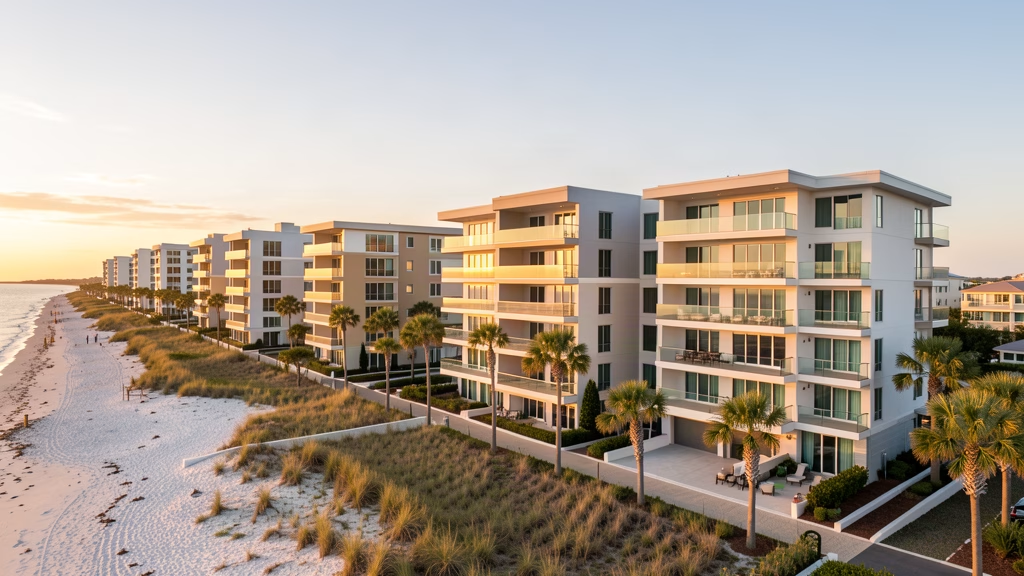
Panama City Beach and the surrounding Bay County coastline sit in a wind-borne debris region and a designated flood zone. Insurance carriers price these factors aggressively, and the gap between adequate coverage and affordable premiums has widened since Hurricane Michael. Boards that don’t audit their policies regularly are flying blind — and fiduciary duty under Florida law doesn’t accept “we didn’t know” as a defense.
Bay County-specific risk factors that an audit must address:
- Wind mitigation credits: Are you receiving every credit your building features warrant? Many associations miss credits for roof shape, impact-rated openings, and reinforced concrete construction. A wind mitigation review can recover thousands in overpaid premiums.
- Flood zone reclassification: FEMA flood maps have been updated for Bay County. If your building’s zone designation changed, your required coverage and premium calculations may be outdated.
- Ordinance and law coverage: Bay County building codes require specific construction standards for coastal properties. If your policy lacks ordinance and law endorsement, a partial loss could trigger a full-code-compliance rebuild that the policy won’t cover.
- Deductible structures: Hurricane deductibles in Bay County are typically percentage-based (2-5%). A board that doesn’t understand its deductible exposure during a named storm is unprepared for the out-of-pocket cost before insurance kicks in.
How Technology Transforms the Insurance Audit Process
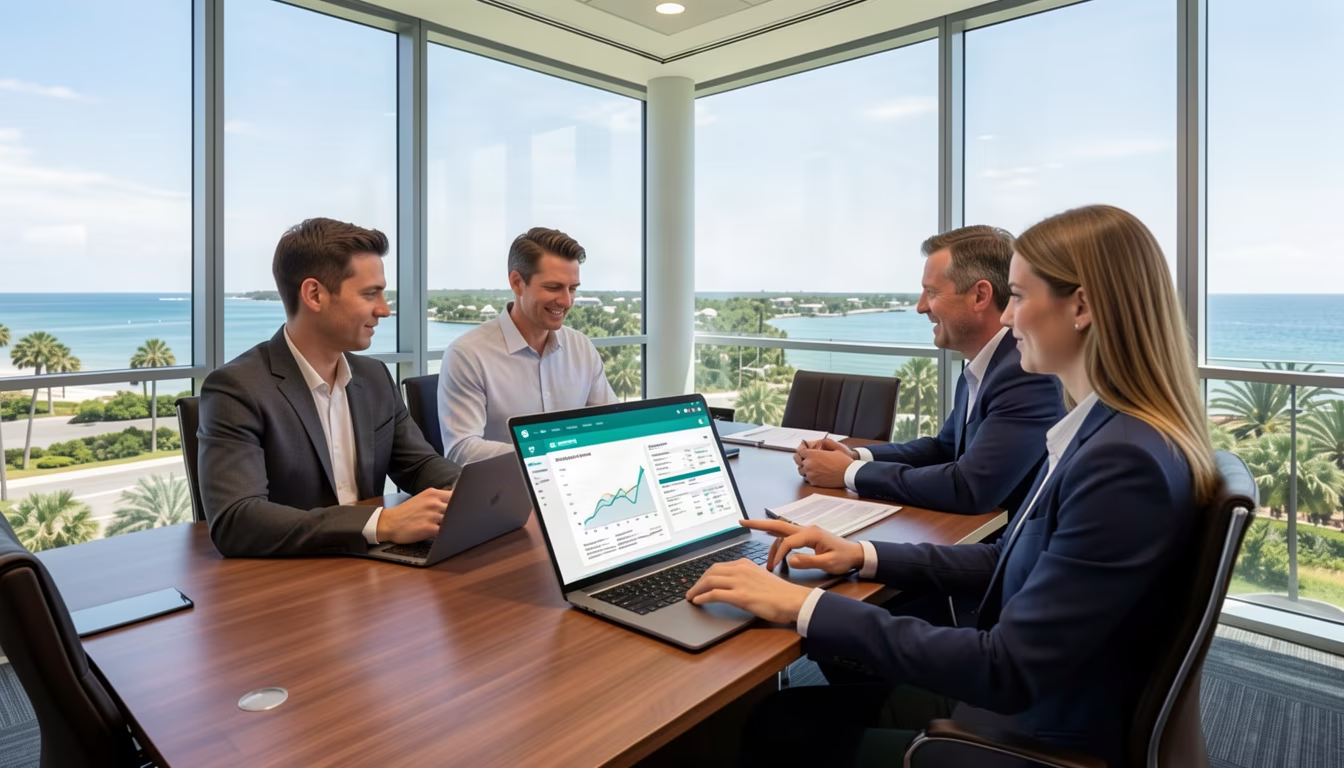
The traditional insurance audit is a binder-and-spreadsheet exercise. A manager prints the declarations pages, enters the key numbers into a spreadsheet, and compares them to last year’s columns. It’s slow, error-prone, and produces a static snapshot that’s outdated the moment a renewal quote arrives.
Technology replaces that process with a living audit. Here’s what changes:
- Automated policy parsing: Digital tools extract coverage limits, deductibles, endorsements, and exclusions from declarations pages without manual data entry. This eliminates transcription errors and lets the board see the full policy structure in one view.
- Replacement cost calibration: Rather than relying on a number from three years ago, technology can pull current Bay County construction cost indices and compare them against the insured dwelling limit in real time.
- Coverage gap detection: The system cross-references your policy against FS 718.111(12) requirements and flags missing or underinsured line items — fidelity bonds, D&O coverage, sewer backup, loss assessment, and ordinance/law endorsements.
- Market rate benchmarking: An automated audit can compare your premium per $1,000 of coverage against regional benchmarks for similar Bay County coastal properties, identifying whether you’re overpaying relative to comparable associations.
- Document continuity: Every audit cycle is stored digitally, creating a longitudinal record that survives management transitions. A new board member can see five years of coverage decisions and premium trends without digging through filing cabinets.
Traditional Management vs. Maxet’s Tech-Driven Insurance Audit
| Audit Dimension | Traditional Management | Maxet’s Tech-Driven Approach |
|---|---|---|
| Policy review frequency | Annual, at renewal | Continuous monitoring with renewal alerts |
| Data extraction | Manual spreadsheet entry | Automated declarations page parsing |
| Replacement cost accuracy | Stale appraisal, updated every 3-5 years | Real-time calibration against Bay County cost indices |
| Statutory compliance check | Agent confirms “you’re covered” | Automated cross-reference against FS 718.111(12) requirements |
| Audit record retention | Paper binders, lost in transitions | Digital archive, accessible to board across management changes |
| Gap detection | Reactive — discovered after a claim denial | Proactive — flagged before renewal, with remediation options |
Step-by-Step: Building a Tech-Driven Insurance Audit for Your Board
If your Bay County condo board has never conducted a structured insurance audit, the process can feel overwhelming. Here’s a practical roadmap that any board can follow with the right management partner:
- Gather all current policies and endorsements. This includes the master property policy, general liability, D&O, fidelity bond, umbrella/excess, and any standalone flood or wind policies. Don’t forget amendments and side letters — they change coverage.
- Extract coverage data digitally. Upload declarations pages into the audit system. The technology should parse limits, deductibles, covered perils, exclusions, and endorsements automatically — no manual entry.
- Calibrate replacement cost. Pull current construction cost data for Bay County coastal properties. Compare the insured dwelling limit against the calculated replacement cost. If the gap exceeds 10%, flag it for the board.
- Run the statutory compliance check. Verify that your coverage meets every requirement under FS 718.111(12): property insurance at replacement cost, liability coverage at or above the statutory minimum, and fidelity bonding for directors, officers, and anyone with access to association funds.
- Benchmark premium efficiency. Compare your premium per $1,000 of dwelling coverage against Bay County coastal condo benchmarks. If you’re above the median, investigate whether wind mitigation credits, deductible adjustments, or policy restructuring can close the gap.
- Generate a board-ready audit report. The output should be a single document — not a binder — that shows current coverage, identified gaps, recommended actions, and cost implications. The board votes on remediation, not on understanding the data.
- Schedule the next audit cycle. Set automated alerts for 90 days before renewal so the audit informs the renewal negotiation rather than rubber-stamping it.

What Bay County Boards Should Demand from an Insurance Audit
The audit is only as good as the questions the board asks. If your management company hands you a one-page summary at renewal, you’re not getting an audit — you’re getting a quote review. Here’s what a Bay County condo board should demand:
- A coverage gap report, not a premium comparison. The #1 risk for coastal condos isn’t overpaying — it’s being underinsured and not knowing until a hurricane exposes the shortfall. The audit must identify gaps first, costs second.
- Named-peril coverage verification. Confirm that wind, named storm, flood, and water damage are covered perils — not excluded or subject to sub-limits that would leave the association paying out of pocket.
- Deductible exposure modeling. What does a 3% hurricane deductible mean in dollars for your building? The board should know the out-of-pocket cost before insurance responds, and whether reserves can absorb it.
- Fidelity bond adequacy. FS 718.111(12)(d) requires fidelity bonding for directors, officers, and employees with access to association funds. Verify the bond amount covers all individuals and meets the statutory minimum.
- A documented audit trail. If a future board member or auditor asks “when did we last review insurance and what did we find,” the answer should be a click away — not a shrug.
Boards that don’t demand this level of scrutiny are accepting personal liability for gaps they can’t see. A board management checklist that includes a structured insurance audit is the baseline — not the ceiling — for fiduciary care in Bay County.
Frequently Asked Questions
How often should a Bay County condo association audit its insurance coverage?
At minimum, a full insurance audit should happen annually, 90 days before renewal — not at renewal. For Bay County coastal condos, a mid-year coverage check is also prudent during hurricane season (June through November). If your association has undergone a milestone inspection, a reserve study update, or a building repair project, audit immediately after — these events change your risk profile and may require coverage adjustments.
What happens if our insurance audit reveals we’re underinsured?
Underinsurance is a fiduciary risk. If the audit reveals a coverage gap, the board should document the finding, consult with the insurance agent to adjust coverage, and — if the increased premium creates a budget shortfall — follow a budget correction process that may include a special assessment. Ignoring the gap is not an option; documenting the finding and taking action protects directors from personal liability under Florida law.
Can technology replace our insurance agent or broker?
No. Technology handles the data synthesis — parsing policies, benchmarking premiums, detecting coverage gaps, and generating audit reports. The insurance agent or broker provides the market relationships, policy negotiations, and claims advocacy. The technology ensures the board walks into that conversation with a complete picture of current coverage and identified gaps, rather than relying on the agent’s summary alone. Human-in-the-loop means the board makes the decisions; the technology makes sure those decisions are informed.
What records do we need for a tech-driven insurance audit?
Gather the current master property policy declarations, general liability declarations, D&O and fidelity bond documents, any standalone flood or wind policies, the most recent replacement cost appraisal or reserve study, and the last three years of premium invoices. If your association has had any claims in the past five years, include the claim files and settlement records. Technology can work with digital PDFs — no paper binders required.
Legal disclaimer: Maxet is a professional community association management firm providing business operational efficiency and administrative support. We are not a law firm, and the information provided in this article does not constitute legal advice or create an attorney-client relationship. For specific legal interpretation of Florida Statutes or governing documents, we strongly recommend consulting with a licensed attorney specializing in Florida community association law.