
Short answer: Recovering a bankrupt or insolvent HOA account in Northwest Florida requires a three-pronged approach: a forensic digital audit to identify the leak, a statutory budget correction under Florida Statute 720 to restore liquidity, and a phased special assessment roadmap to fund critical deferred maintenance. The goal is to move from crisis management to a sustainable fiduciary standard.

What Constitutes a ‘Bankrupt’ HOA Account?
In the context of community association management, “bankruptcy” rarely means a formal legal filing. Instead, it refers to operational insolvency—a state where the association cannot meet its current financial obligations, such as utility payments, insurance premiums, or critical vendor contracts, without exhausting its reserves or failing to pay its bills.
For boards in Bay County, this crisis often stems from a combination of legacy underfunding, unexpected infrastructure failures, and a lack of transparent financial oversight. When an account hits this tipping point, the board’s primary focus must shift from “standard maintenance” to “Crisis Recovery.”
The Fiduciary Risks of Financial Insolvency in Florida
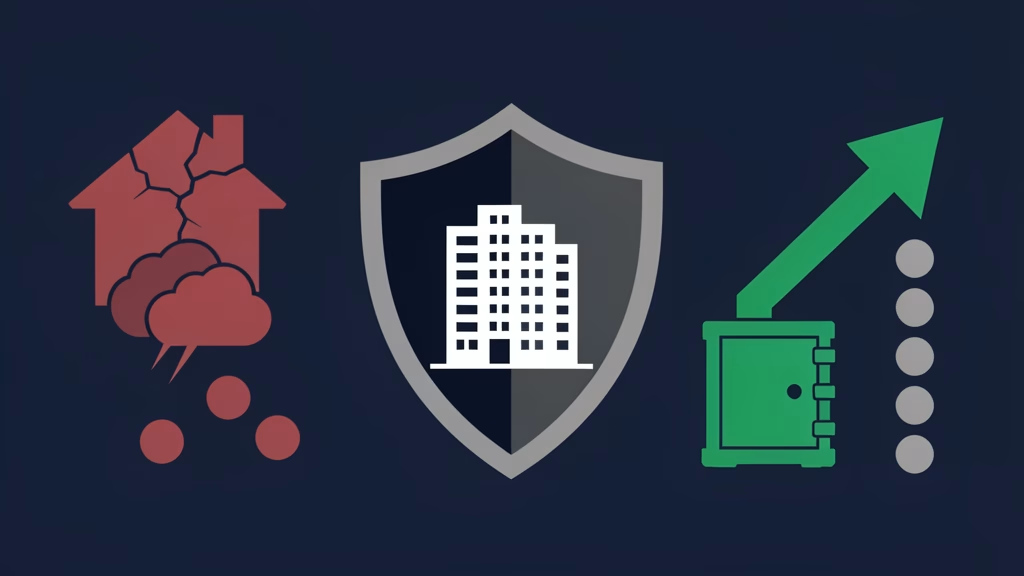
Operating an insolvent association is not just a business failure; it is a high-stakes fiduciary risk. Under Florida Statutes 718 (Condominiums) and 720 (HOAs), board members have a legal duty to maintain the common elements and preserve the association’s financial health.
Allowing an account to lapse into insolvency can lead to:
- Personal Liability: While boards have some protections, systemic negligence in financial oversight can lead to claims of fiduciary breach.
- Asset Degradation: When bills aren’t paid, vendors stop working. In the salt-heavy environment of Northwest Florida, a three-month delay in roof or drainage repair can lead to a million-dollar structural failure.
- Loss of Insurance: Insurance carriers in Florida are increasingly aggressive. A lapse in payment or a failure to fund reserves can lead to immediate policy cancellation.
The Maxet Recovery Framework: From Insolvency to Stability
Maxet does not use “generic” management for insolvent accounts. We implement a specialized Recovery Framework designed to restore liquidity and professionalize operations.
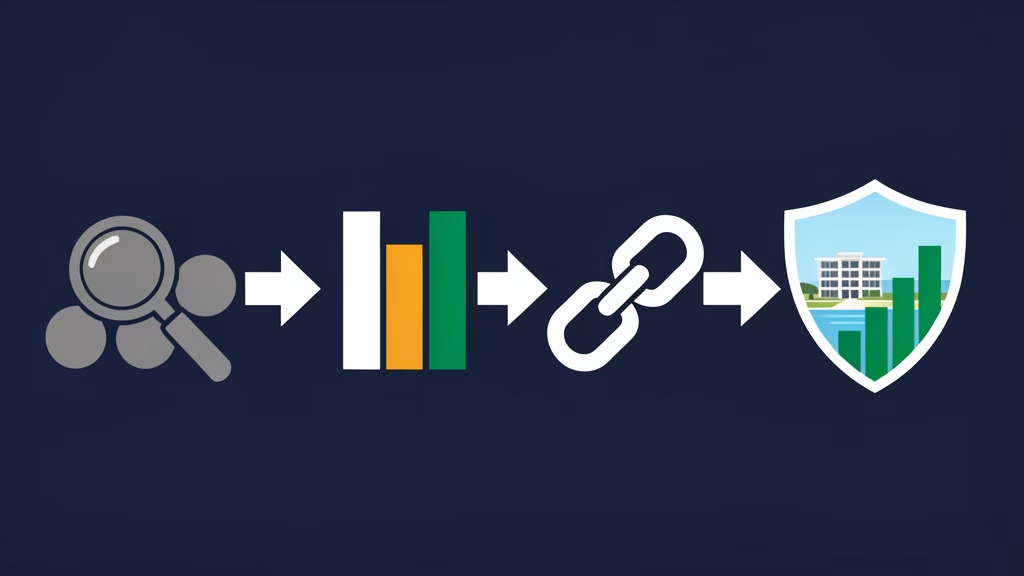
1. Forensic Financial Audit (The Digital Deep Dive)
We begin by replacing fragmented spreadsheets with a digital forensic audit. We identify every outstanding liability, missing fee, and misallocated fund. By treating the audit as a “Reasoning Engine,” we can pinpoint exactly where the budget failed and create a verified baseline of the association’s true financial position.
2. Budget Correction & Special Assessment Strategy
Once the gap is quantified, we execute a budget correction. This isn’t just about raising dues; it’s about aligning the budget with the actual cost of operation and statutory reserve requirements. If the deficit is too deep for regular dues to fix, we design a transparent, data-backed special assessment roadmap that justifies the cost to homeowners through visual evidence and project milestones.
3. Vendor Negotiation & Debt Restructuring
We step in as the professional buffer between the board and its creditors. We negotiate payment plans with critical vendors and restructure debts to ensure that the most essential services (water, power, security) are restored first, preventing total operational collapse.
4. Long-Term Stabilization & Reserve Rebuilding
Recovery is only successful if the crisis doesn’t repeat. We implement automated financial reporting and live dashboards for the board, ensuring that early warning signs of insolvency are detected in real-time, not months after the fact.
Traditional Management vs. Maxet’s Recovery Specialization
| Approach | Traditional Management | Maxet Recovery Specialization |
|---|---|---|
| Financial Analysis | Review of previous year’s budget | Forensic Digital Audit & Baseline Verification |
| Debt Handling | Reactive payment of loudest vendor | Strategic Debt Restructuring & Negotiation |
| Homeowner Comms | Generic “Budget Increase” letters | Data-Backed Special Assessment Roadmaps |
| Future Guardrails | Manual monthly reporting | Live Financial Dashboards & Early Warning Systems |
Frequently Asked Questions
Can a board be held personally liable for HOA insolvency?
While the “Business Judgment Rule” provides some protection, a board that ignores clear financial warnings or fails to act on a known deficit may be found to have breached its fiduciary duty. Professional management provides the documentation needed to prove the board acted in good faith.
How do we tell homeowners we need a special assessment to avoid bankruptcy?
Transparency is the only way to maintain trust. We provide homeowners with a “Cost of Inaction” report—showing exactly what happens to property values if critical services are cut—paired with a professional plan to fix the budget permanently.
How long does a typical financial recovery take?
Depending on the depth of the deficit, initial stabilization (restoring critical services) typically happens within 30-60 days. Full budget correction and reserve rebuilding usually take 12-24 months of disciplined execution.
Is your Bay County association facing a financial crisis? Don’t wait until the vendors stop coming. Contact Maxet for a professional Financial Recovery Audit today.
For a broader board-readiness review, see Maxet’s Bay County HOA management company.
Legal disclaimer: Maxet is a professional community association management firm providing business operational efficiency and administrative support. We are not a law firm, and the information provided in this article does not constitute legal advice or create an attorney-client relationship. For specific legal interpretation of Florida Statutes or governing documents, we strongly recommend consulting with a licensed attorney specializing in Florida community association law.