
Short answer: Resolving reserve deficiencies in Bay County requires a systematic approach: conducting a professional reserve study, implementing a forensic digital audit of current spending, and executing a statutory budget correction under Florida Statute 720. By leveraging real-time financial dashboards, boards can eliminate fiduciary blind spots and restore long-term community stability.

The High Cost of Underfunded Reserves in Northwest Florida
For many associations in Bay County, reserve deficiencies are not just accounting errors—they are structural risks. When reserves for roofing, paving, or seawalls are underfunded, boards are often forced into the ‘Special Assessment Cycle,’ where homeowners are hit with sudden, large bills that cause friction and lower property values.
Legacy management often hides these deficiencies through ‘budget smoothing’ or by diverting funds from other critical areas. In the high-stakes environment of Panama City Beach and unincorporated Bay County, this approach is a fiduciary liability. A board that ignores reserve shortfalls is effectively managing by hope, not by data.
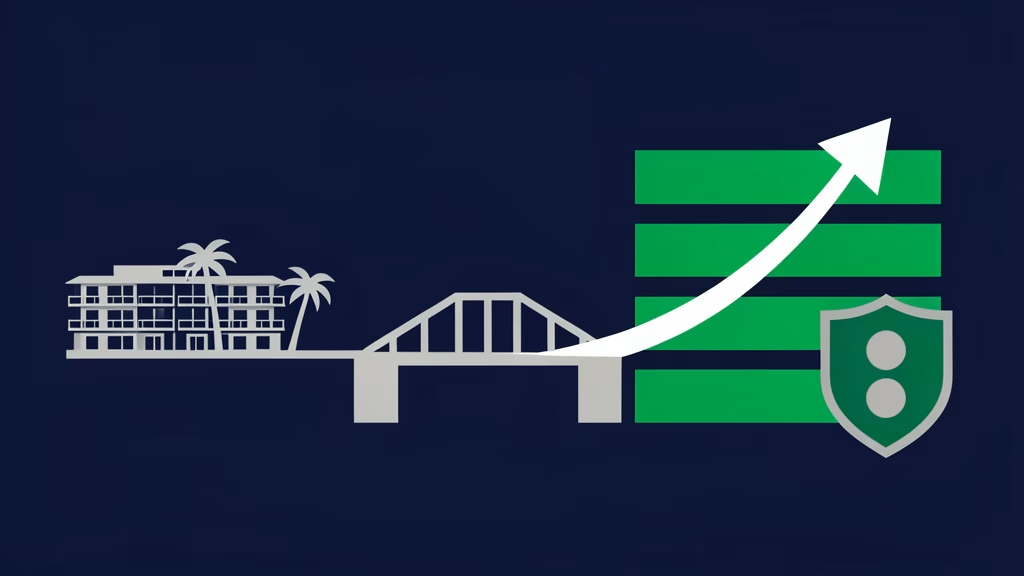
The Maxet Recovery Roadmap: From Crisis to Compliance
Maxet replaces reactive crisis management with a reasoning engine for reserve recovery. We guide Bay County boards through a three-step modernization process:
1. The Forensic Reserve Audit
We don’t just look at the last reserve study; we audit the actual spending patterns of the association. By digitizing historical invoices and cross-referencing them with asset lifecycles, we identify exactly where the deficiency originated and how to plug the leak.
2. Statutory Budget Correction
Under Florida Statute 720, boards have a fiduciary duty to maintain reserves. We help boards calculate the ‘True Gap’—the difference between current funding and statutory requirements—and design a multi-year funding plan that balances homeowner affordability with legal compliance.
3. Tech-Driven Funding Oversight
Once the plan is in place, we deploy live financial dashboards. Instead of waiting for a monthly PDF, boards can see real-time reserve levels and spending trends. This transparency prevents ‘reserve raiding’ and ensures that funds are available when the next major project hits.
Traditional Management vs. Maxet’s Recovery Specialization
| Recovery Strategy | Traditional Management | Maxet’s Tech-Driven Approach |
|---|---|---|
| Reserve Analysis | Relies on outdated studies | Forensic digital audit + live tracking |
| Budget Planning | Reactive special assessments | Statutory gap analysis + multi-year plan |
| Transparency | Manual reports, late delivery | Real-time dashboards for board visibility |
Frequently Asked Questions
How do we fix a reserve shortfall without a massive special assessment?
While some gaps may require a one-time assessment, the goal is to use ‘Budget Correction.’ By auditing operational expenses and identifying waste, we often find ways to redirect funds into reserves without drastically increasing monthly dues.
Is a reserve study legally required in Florida?
Yes, specifically for condominiums under FS 718, structural integrity reserve studies (SIRS) are now mandatory. For HOAs under FS 720, while the requirements differ, the fiduciary duty to maintain the community remains. We help boards navigate these specific statutory nuances.
How often should we update our reserve study?
A professional study should be updated every 3-5 years. However, in the volatile coastal environment of Bay County, we recommend a more frequent digital review of asset lifecycles to ensure the numbers stay current.
Ready to secure your association’s financial future? Stop guessing and start knowing. Contact Maxet for a Reserve Recovery Audit today.
For a broader board-readiness review, see Maxet’s Bay County HOA management company.
Legal disclaimer: Maxet is a professional community association management firm providing business operational efficiency and administrative support. We are not a law firm, and the information provided in this article does not constitute legal advice or create an attorney-client relationship. For specific legal interpretation of Florida Statutes or governing documents, we strongly recommend consulting with a licensed attorney specializing in Florida community association law.