
Short answer: Technology-driven HOA insurance claims management uses digital documentation, automated claim tracking, and centralized evidence portfolios to help Bay County coastal boards recover faster after storms and property damage. Instead of chasing paper receipts and emailed PDFs, boards get a single dashboard showing every claim’s status, supporting documentation, and settlement timeline — giving your manager and insurance carrier a shared, auditable record that reduces disputes and shortens payout cycles.
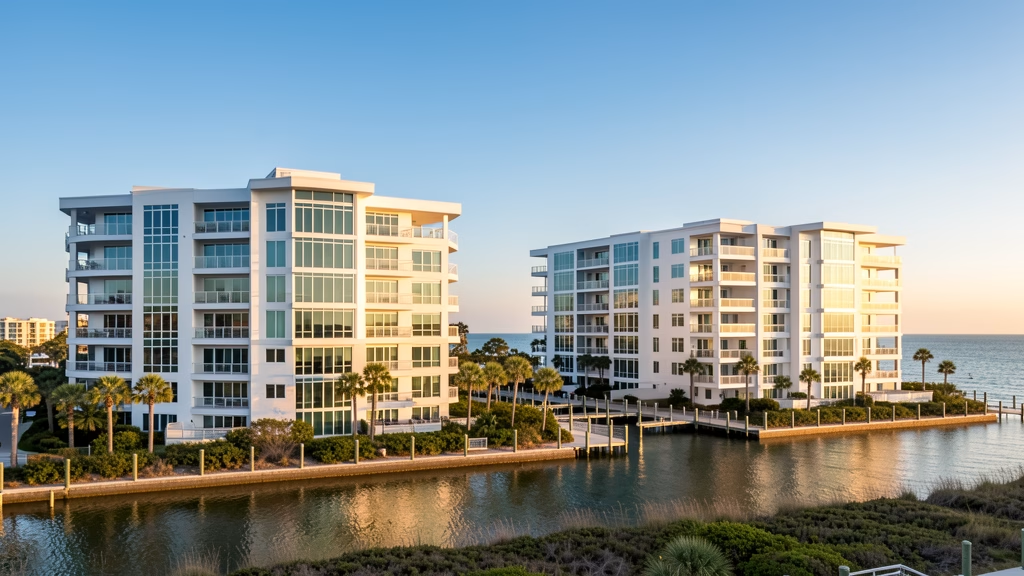
If your Bay County association has been through a named storm, you already know the frustration. A roof claim sits open for eight months. The adjuster asks for photos that nobody can find. The board president who started the claim moves out of state. And the insurance carrier stalls because the documentation is scattered across three different emails and a spreadsheet that only one person understands.
This is the status quo for most Northwest Florida associations — and it is costing boards real money. Delayed claims mean delayed repairs. Delayed repairs mean worsening damage. And every month a claim stays open, your association is absorbing costs that should have been covered by the policy you pay premiums on.
For Bay County boards operating under Florida Statutes 718 and 720, the fiduciary duty to properly manage insurance claims isn’t optional. It’s a legal obligation. The question isn’t whether your association should modernize claims management — it’s whether you can afford not to.
Why Coastal Florida Associations Lose on Insurance Claims
Most HOA and condo insurance claims in Bay County don’t fail because the damage isn’t covered. They fail — or settle for far less than they should — because the documentation is incomplete, disorganized, or submitted late. Here’s what that looks like in practice:
Scattered Evidence
After a storm, photos get taken on five different phones. Receipts go into a shoebox. Contractor estimates come in as email attachments that get buried. When the adjuster asks for everything in one package, nobody can produce it. The claim gets undervalued because the carrier only sees part of the picture.
No Claim Status Visibility
The board asks the manager for an update. The manager calls the insurance agent. The agent calls the carrier. Three days later, someone gets back with “still processing.” Multiply this across multiple claims and multiple storms, and your board is spending meeting time chasing status updates instead of making decisions.
Lost Institutional Knowledge
When a board member or manager transitions out, the institutional knowledge about which claims are open, what’s been submitted, and what’s still pending goes with them. The new board inherits a mess and has to reconstruct the claim history from scratch — if they even know the claims exist.
How Technology Changes the Game for Bay County Boards
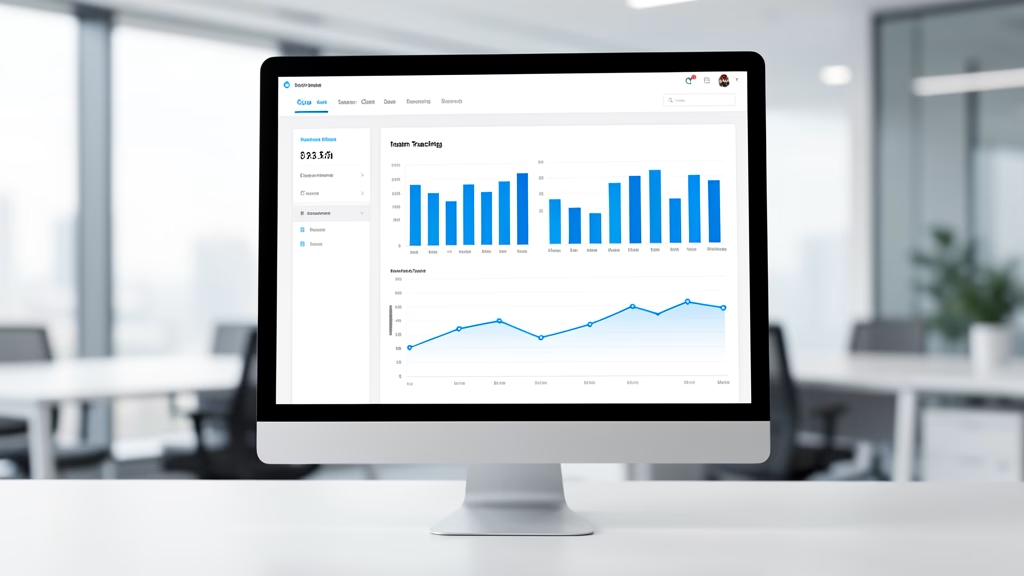
Technology-driven claims management isn’t about replacing your insurance professional. It’s about giving your board, your manager, and your carrier a shared system of record that makes the process transparent, trackable, and auditable. The technology handles the data synthesis and documentation — while your manager provides the professional judgment and operational execution.
Digital Evidence Portfolios
Instead of photos scattered across phones, every image is uploaded to a centralized, timestamped repository. Pre-storm condition photos, post-storm damage photos, contractor estimates, repair invoices — all tagged by building, date, and claim number. When the adjuster needs documentation, your manager exports a complete claim package in minutes.
Automated Claim Tracking
Every claim gets a status dashboard: submitted date, adjuster assigned, adjuster visit date, estimate received, supplement filed, settlement offered, payment received. The board sees this at a glance — no phone calls, no email chains, no guessing. When a claim stalls past a threshold, the system flags it for action.
Document Version Control
When the carrier requests revised documentation, the system tracks which version was submitted, when, and by whom. No more confusion about whether the “latest” estimate is actually the latest. Every revision is logged, and the full submission history is available for audit.
Carrier Communication Log
Every call, email, and letter between your association and the insurance carrier is logged in the claim record. If a dispute arises about what was communicated and when, the log is your evidence. This is especially critical for Bay County boards dealing with multiple storm claims across multiple carriers.
The Fiduciary Case: What Florida Law Expects of Your Board
Under Florida Statute 718.111(11) for condominiums and the fiduciary standards in Florida Statute 720.303 for HOAs, board members have a duty to act in the best interests of the association. That includes properly pursuing insurance claims and documenting the association’s losses. A board that allows claims to drift, documentation to disappear, or settlements to go unchallenged is exposing itself to owner claims of fiduciary breach.
The board’s job isn’t to become an insurance expert. The board’s job is to set a standard of care, demand professional documentation, and verify that claims are being actively managed. Technology gives you the tools to do that without micromanaging your CAM.
Traditional Claims Management vs. Tech-Driven Claims Management
| Aspect | Traditional Management | Tech-Driven Management |
|---|---|---|
| Documentation | Photos on phones, receipts in folders, emails scattered | Centralized digital portfolio, timestamped, tagged by building |
| Status Tracking | Phone calls and email chains; “still processing” | Real-time dashboard with milestone dates and stall alerts |
| Carrier Communication | Verbal updates, no written log | Full communication log in claim record, audit-ready |
| Board Transition | Institutional knowledge walks out the door | Complete claim history preserved in the system |
| Dispute Evidence | Reconstructing from memory and loose files | Full submission history, version control, timestamped evidence |
| Time to Settlement | 6-18 months, often undervalued | 3-9 months, fully documented, fewer disputes |
A Practical Roadmap for Bay County Boards
If your association is still managing insurance claims the old way, here’s a phased approach to modernize without disrupting your current carrier relationship:
Phase 1: Baseline Documentation (Before the Next Storm)
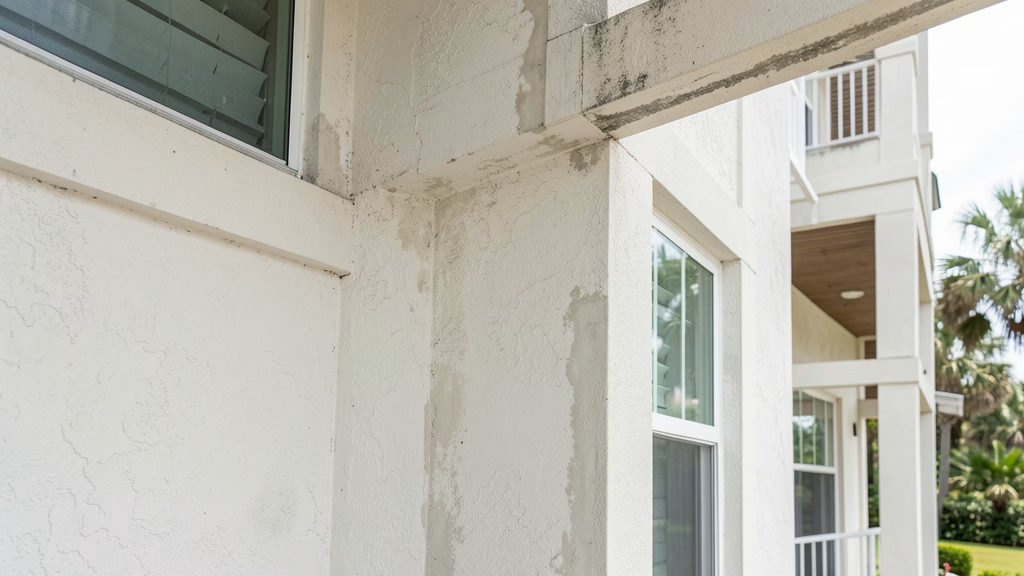
Before storm season, conduct a full property condition assessment with timestamped photos of every building, roof, and common area. Upload these to a centralized repository. This is your pre-loss condition baseline — the single most valuable document in any future claim. If your current manager can’t produce this, that’s a red flag.
Phase 2: Claim Workflow Setup
Establish a digital claim tracking template that includes: claim number, date of loss, carrier, adjuster name and contact, submission date, supporting documents, status, and expected next action. Every claim — even small ones — gets entered. This creates the habit and the system before a major event forces it.
Phase 3: Carrier Integration
Most major carriers now accept digital claim packages. Work with your insurance agent to establish a protocol for submitting documentation electronically. Ask your carrier if they support electronic status updates — many do, but don’t advertise it.
Phase 4: Board Reporting Cadence
At every board meeting, include a claims status summary: open claims, days since filing, estimated settlement, and any stalls requiring board action. This takes two minutes with a proper dashboard and keeps the board engaged without buried in detail.
Common Questions from Bay County Board Members
Does our insurance carrier require us to use technology for claims?
No carrier requires it, but most welcome it. Carriers process claims faster when documentation is complete and organized. A digital claim package reduces the carrier’s workload, which often translates to faster reviews and fewer requests for additional information.
What if our current management company doesn’t offer this?
That’s a signal. If your CAM cannot produce a digital claim tracking system, ask why. The tools are widely available and inexpensive. A management company that relies on paper files and phone calls for insurance claims is operating at a standard that no Bay County board should accept in 2026. This is a legitimate criterion when evaluating whether to renew or replace your management contract.
Can technology help with underpaid or denied claims?
Yes. If a claim is underpaid or denied, the most effective response is a documented supplement with complete evidence. A digital claims portfolio gives your public adjuster or attorney everything they need in one package — photos, estimates, correspondence log, and submission history. This dramatically shortens the supplement process and improves recovery outcomes.
How much does this cost?
The technology itself is modest — most association management platforms include claims tracking as a feature, and standalone tools are available at low monthly cost. The real investment is in the discipline of using it consistently. The return is measured in faster settlements, higher recovery amounts, and fewer hours spent in board meetings chasing claim status.
The Bottom Line for Bay County Boards
Insurance claims are one of the largest financial events your association will face. In coastal Florida, it’s not a question of if you’ll file a claim — it’s when, and how prepared you are when it happens. Boards that manage claims with paper folders and phone calls are leaving money on the table and exposing themselves to fiduciary risk. Boards that use technology to document, track, and report on claims are fulfilling their duty, recovering faster, and protecting their owners’ investment.
If your current management company can’t show you a claims dashboard, it’s time to ask harder questions. Contact Maxet to learn how our tech-driven approach to insurance claims management helps Bay County boards recover faster and protect their communities.
Frequently Asked Questions
What insurance does a Bay County HOA board need to carry?
Florida Statute 718.111(11) requires condominium associations to maintain property insurance on common elements and liability insurance. HOAs governed by Chapter 720 should check their governing documents for insurance requirements, which typically include general liability and property coverage for common areas. Your board should review coverage annually with a licensed insurance agent familiar with coastal Florida risks.
How long does an HOA insurance claim take in Florida?
timelines vary by claim complexity and carrier responsiveness. A well-documented claim with complete evidence typically resolves in 3-6 months. Poorly documented claims can drag on for 12-18 months. Technology-driven claims management consistently shortens timelines by ensuring the carrier has everything needed upfront.
Can a Bay County board member be held personally liable for mishandled insurance claims?
Board members have fiduciary duties under Florida law. While directors’ and officers’ (D&O) insurance provides protection, a board that consistently fails to pursue claims, document losses, or act in the association’s best interest could face owner claims of breach of fiduciary duty. Proper documentation and professional management are your best protection.
What should a Bay County board demand from their management company for insurance claims?
At minimum: a pre-storm property condition assessment with photos, a digital claim tracking system, regular claims status reporting at board meetings, a documented carrier communication log, and a post-loss documentation protocol. If your manager can’t deliver these, you’re operating below the standard of care that Bay County boards should expect.
Boards evaluating their current provider can use Maxet’s Bay County HOA management standard as a benchmark for financial reporting, vendor oversight, and owner communication.
Legal disclaimer: Maxet is a professional community association management firm providing business operational efficiency and administrative support. We are not a law firm, and the information provided in this article does not constitute legal advice or create an attorney-client relationship. For specific legal interpretation of Florida Statutes or governing documents, we strongly recommend consulting with a licensed attorney specializing in Florida community association law.